Monthly Payments as Low as $99! | 1/2 OFF Labor on second Project
Hiring the wrong bathroom remodeler is an expensive mistake. In Massachusetts, a bathroom renovation can cost anywhere from $15,000 to $75,000 or more. Unlike buying a product, there are no easy returns. The contractor you choose determines whether your project finishes on time, on budget, and up to code. The right pre-hiring checklist separates professionals from problems before work ever begins. This remodeler selection guide gives homeowners the exact questions for bathroom remodeler interviews that protect their investment from day one. Use these hiring remodeling questions and bathroom contractor interview steps to vet every candidate the right way.
Key Takeaways
Asking the right questions upfront is the difference between a smooth renovation and a costly dispute. Most problems (blown budgets, stalled timelines, substandard work) are predictable. The right questions surface before you sign anything.
The right questions set clear expectations on both sides. A bathroom renovation in Massachusetts typically runs $15,000 to $75,000 or more in the Boston metro area. Without specific answers about scope, materials, and scheduling, that number can grow fast.
Standard projects run 6–12 weeks from demolition to final walkthrough. Permit processing, material lead times, and crew availability all affect that window. A contractor who can’t give you a realistic timeline up front won’t manage the schedule any better once work starts.
The lowest bid is rarely the best value. Bids priced 30% or more below competing quotes almost always signal shortcuts: cheaper materials, unlicensed labor, or missing insurance coverage. Any of those gaps becomes your liability once work is underway.
Choose careful vetting if you want predictable costs, a protected deposit, and work that passes inspection. Choose the lowest bid only if you’re prepared to absorb the risk that comes with it.
Careful vetting makes sense for any bathroom renovation over $15,000, any project involving plumbing, electrical, or structural work, and any homeowner who wants predictable costs and a protected deposit. The higher the project value, the more critical the vetting process becomes.
Fully vetted contractors carry HIC registration, $1–2M in general liability coverage, and active workers’ compensation insurance. They provide itemized written estimates, milestone-based payment schedules, and documented change order processes. Low-bid contractors frequently lack one or more of these, which shifts risk directly to the homeowner once work begins.
Homeowners who vet thoroughly before signing report fewer cost overruns, fewer mid-project disputes, and higher satisfaction at project completion. Projects completed by fully registered and insured contractors are also more likely to pass final inspection without corrections. Those who prioritize price alone are more likely to encounter scope creep, inspection failures, or incomplete work.
If you are still weighing whether to hire a pro or handle parts of the project yourself, understanding that distinction first will sharpen every question you ask.
These ten questions form the core of any bathroom contractor interview. Ask every candidate the same questions. Their answers reveal competence, honesty, and how they’ll behave once work begins.
Look for a minimum of 5–10 years of bathroom-specific experience. Massachusetts only requires 3 years of construction experience for a Construction Supervisor License (CSL), but that’s a floor, not a standard.
Bathroom work demands specialized knowledge: waterproofing, wet-area tile, ventilation, and tight coordination of plumbing and electrical in confined spaces. A generalist who occasionally does bathrooms isn’t the same as a specialist who does them every day.
In Massachusetts, any contractor working on an owner-occupied 1–4 unit property must hold a Home Improvement Contractor (HIC) Registration through OCABR. Hiring an unregistered contractor forfeits access to the HIC Guaranty Fund, which covers homeowners up to $25,000 for unpaid judgments.
Beyond registration, reputable contractors carry $1–2M in general liability coverage. Workers’ compensation is legally mandatory for any Massachusetts employer. Non-compliance triggers stop-work orders and fines starting at $100 per day. Verify everything with a Certificate of Insurance (COI) and confirm HIC status at the MA Contractor Hub.
If you have additional questions about what registration and insurance mean for your project, our FAQ covers the most common concerns
Request 3–5 references from projects comparable to yours in scope and budget. Call them. Don’t email. A conversation reveals far more.
Ask whether the contractor stayed on budget and schedule, how they handled problems, and whether the homeowner would hire them again. Consistent patterns across multiple references are the most reliable indicator of how a contractor actually operates.
In Massachusetts, a written contract is legally required for any home improvement project over $1,000. A professional estimate is itemized by category: demolition, rough plumbing, rough electrical, waterproofing, tile, flooring, fixtures, cabinetry, painting, and cleanup. Lump-sum quotes are not acceptable.
The contract must include the scope of work, material specifications with brand and model, start and end dates, a milestone-based payment schedule, a written change order process, warranty terms, lien waivers, and a dispute resolution process.
A realistic timeline is 6–12 weeks for a standard bathroom renovation in Massachusetts. Anything significantly faster deserves scrutiny.
Contractors who promise unusually quick timelines are either rushing the work or overcommitting their crew. A contractor who builds contingency time into the schedule is showing honest, experienced planning, not padding.
The contractor owns this entirely. They pull the permits, schedule the inspections, and ensure the work passes. A CSL is required for structural work on buildings under 35,000 cubic feet. Confirm whether your project triggers that requirement.
Any contractor who suggests skipping permits to save time or money is a red flag. Unpermitted work creates legal and financial liability that follows the homeowner, not the contractor.
A dedicated, consistent crew produces better results than a rotating group of subcontractors. Ask specifically who will be on-site each day and what their qualifications are.
Choose a contractor with a stable crew if quality and continuity matter to you. Expect higher cohesion, fewer miscommunications, and more accountability when the same people show up every day.
Every change to the original scope must be documented in a written change order, signed by both parties, before new work begins. It must specify the additional work, the cost, and any timeline impact.
Verbal agreements about changes are one of the most common sources of contractor disputes. If a contractor is comfortable making changes informally, that’s a problem, not a convenience.
A reputable contractor provides a written warranty of 1–2 years covering workmanship defects. This is separate from manufacturer warranties on fixtures and materials, which typically run longer.
Get it in writing. A verbal promise of “we stand behind our work” is not a warranty.
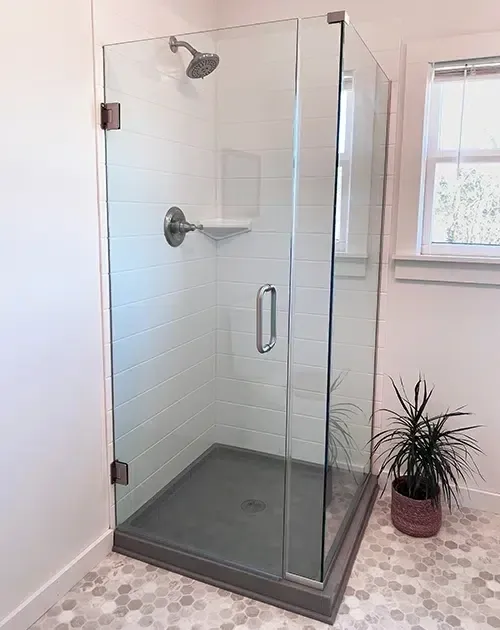
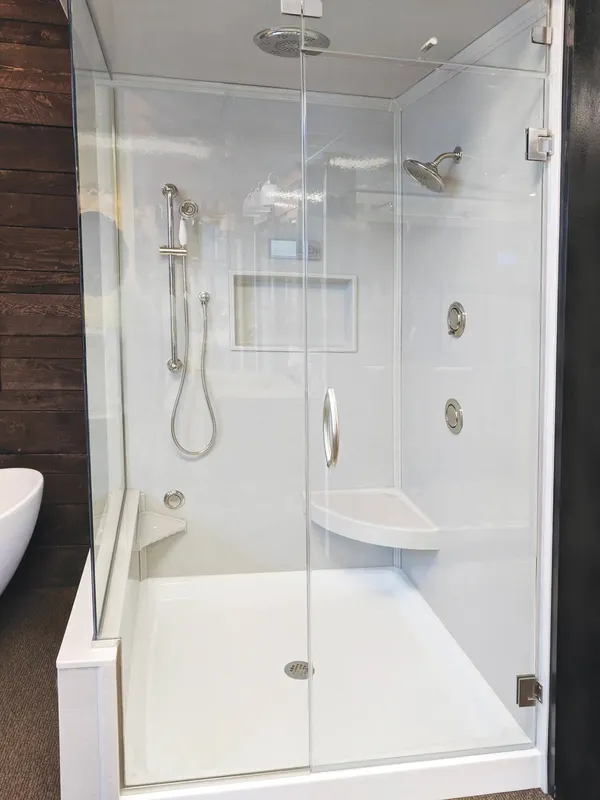
If a walk-in shower is part of your renovation, choosing the right configuration before hiring affects both scope and budget.
The standard milestone-based structure in Massachusetts looks like this: 10–30% deposit at signing, 20–30% after demolition and rough-in inspection, 20–30% after tile and drywall, 10–20% after fixtures and lighting, and 10% final retainage at project completion and sign-off.
That final 10% retainage is critical. It gives you real leverage to make sure every punch-list item is resolved before the contractor receives full payment.
Collecting answers is only half the work. Comparison is where the right contractor becomes clear. Price alone is a poor filter. Professionalism, credentials, and communication tell you far more.
Professional affiliations are meaningful quality signals. Membership in NARI (National Association of the Remodeling Industry) or NKBA (National Kitchen & Bath Association) indicates a contractor who invests in ongoing education and holds themselves to an ethical standard. NARI’s Certified Remodeler (CR) designation goes further. It requires demonstrated knowledge, documented experience, and a signed code of ethics.
These aren’t guarantees, but they raise the baseline. Choose an affiliated contractor when long-term quality and accountability matter more than the lowest number on the estimate.
Get written estimates from at least 3–5 contractors. One quote gives you a number. Five quotes give you a market.
Don’t compare bottom lines. Compare what’s inside them. Two estimates at the same price can represent very different scopes, material grades, and assumptions. A side-by-side comparison matrix keeps the evaluation objective. Track HIC registration, insurance verification, years of experience, specialist status, total estimate, itemization quality, online rating, BBB rating, references checked, proposed timeline, warranty offered, deposit requested, and communication quality.
The contractor who scores well across all those factors, not just on price, is the one worth hiring.
Red flags before the contract are easier to act on than problems during construction. Knowing what to look for protects your deposit, your timeline, and your home.
A lump-sum estimate with no line-item breakdown tells you nothing useful. You can’t compare it against other bids, and you can’t hold the contractor to anything specific. Vague estimates conceal inflated costs, planned material shortcuts, and scope assumptions that will surface later as change orders.
A professional estimate is itemized: demolition, plumbing, electrical, waterproofing, tile, fixtures, cabinetry, and cleanup are listed separately. If a contractor won’t provide that level of detail before the contract, they won’t provide it after.
A bid priced 30% or more below the competition isn’t a deal. It’s a warning. That gap almost always reflects uninsured labor, inferior materials, or a contractor who won’t be around to finish the job.
Large upfront deposits carry similar risk. Deposits exceeding 30% of the total project cost are a significant financial exposure with a contractor you’ve never worked with. In Massachusetts, an unregistered contractor compounds that risk further. Operating without an HIC registration is illegal and eliminates your access to the state arbitration program and the $25,000 HIC Guaranty Fund.
A contractor who takes days to return calls during the sales process will not improve once the deposit clears. Professional contractors respond within 24–48 hours, consistently, not occasionally.
Vague answers, missed follow-ups, and difficulty reaching a point of contact during the estimate phase are reliable previews of how a project will be managed. Communication quality before the contract is the clearest signal you have of what’s coming.
Answering the right questions gets you close. Confirming the right details gets you across the line. Before any work begins, close every open loop.
Three things should be locked down before the first tool is unpacked. First, confirm a single, dedicated project manager as your primary point of contact, one person who knows your project and can give you accurate updates throughout. Second, verify any professional affiliations independently. NARI membership is searchable at nari.org; NKBA at nkba.org. Don’t take a contractor’s word for it.
Third, request the Certificate of Insurance and call the issuing insurer directly. Confirm the coverage dates, the coverage amounts, and that the policy is active. A COI that’s expired or understated is no protection at all.
A structured pre-hiring checklist removes guesswork from the final decision. Before signing, confirm every item below is resolved.
Use this as your remodeler selection guide and pre-hiring checklist:
Every unchecked box is a conversation to have before you sign, not after.
The right contractor isn’t found by luck. They’re identified through a deliberate process. These final principles tie the entire remodeler selection guide together.
A personal recommendation from a neighbor, friend, or colleague carries real weight. It comes with context, accountability, and a real outcome you can evaluate. Anonymous online reviews don’t offer the same. That said, even the most enthusiastic personal referral doesn’t replace independent verification. Check credentials and call references regardless of the source.
On pricing, the goal is market-rate, not minimum. The lowest bid consistently signals the same risks: inferior materials, uninsured labor, or a contractor who underbids to win the job and recoups margin through change orders. Competitive pricing from a fully vetted contractor is the target.
Every question in this bathroom contractor interview guide serves one purpose: reducing uncertainty before money changes hands. The homeowners who ask thorough hiring remodeling questions before signing a contract are the ones who finish their projects on time, on budget, and without regret. The ones who skip this step are the ones who wish they hadn’t.
You now have the questions, the checklist, and the red flags. The next step is finding a contractor who can answer every one of them confidently.
At Patriot Bath Remodeling, we are fully licensed, insured, and registered in Massachusetts. We provide itemized estimates, milestone-based payment schedules, and a dedicated project manager on every job. We stand behind our work with a written workmanship warranty, and we welcome every question on this list.
Patriot Bath Remodeling is fully licensed, insured, and HIC-registered in Massachusetts. Every project includes a detailed itemized estimate, a milestone-based payment schedule, a dedicated project manager, and a written workmanship warranty. We specialize exclusively in bathroom remodeling, not general contracting, which means every crew member we put in your home works in bathrooms every day.
Choose Patriot Bath Remodeling if you want a fully registered Massachusetts contractor with 50+ years of combined bathroom-specific experience, transparent pricing with no lump-sum quotes, and a single dedicated point of contact from the first consultation through the final walkthrough. We serve homeowners across the South Shore, Greater Boston, Rhode Island, and New Hampshire.
We are not the right fit if you need a general contractor for whole-home renovations, require services outside Massachusetts, Rhode Island, or New Hampshire, or are looking for the lowest possible price regardless of credentials, materials, or warranty coverage. If that describes your situation, we are happy to point you in a better direction.
If you are ready to vet us, we are ready to earn your trust. Call us at (508) 748-5468 or reach out online to schedule your free, no-obligation consultation today.