Monthly Payments as Low as $99! | 1/2 OFF Labor on second Project
Shower door installations represent a significant investment in bathroom renovations, with total costs varying from $700 to $5,600 depending on door type, glass thickness, and hardware quality. Understanding these price factors helps homeowners allocate their bathroom remodel budget effectively while selecting the right door for their space and design preferences.
The global shower glass door market reached $18.8 billion in 2023 and continues growing at 7.0% annually. North American homeowners spend between $3,595 and $5,173 annually on renovations, with shower door upgrades ranking among the most popular bathroom improvements.
Shower doors fall into three primary structural categories: frameless, framed, and semi-frameless designs. Each type offers distinct aesthetic qualities, price points, and practical considerations that influence both installation costs and long-term maintenance requirements.
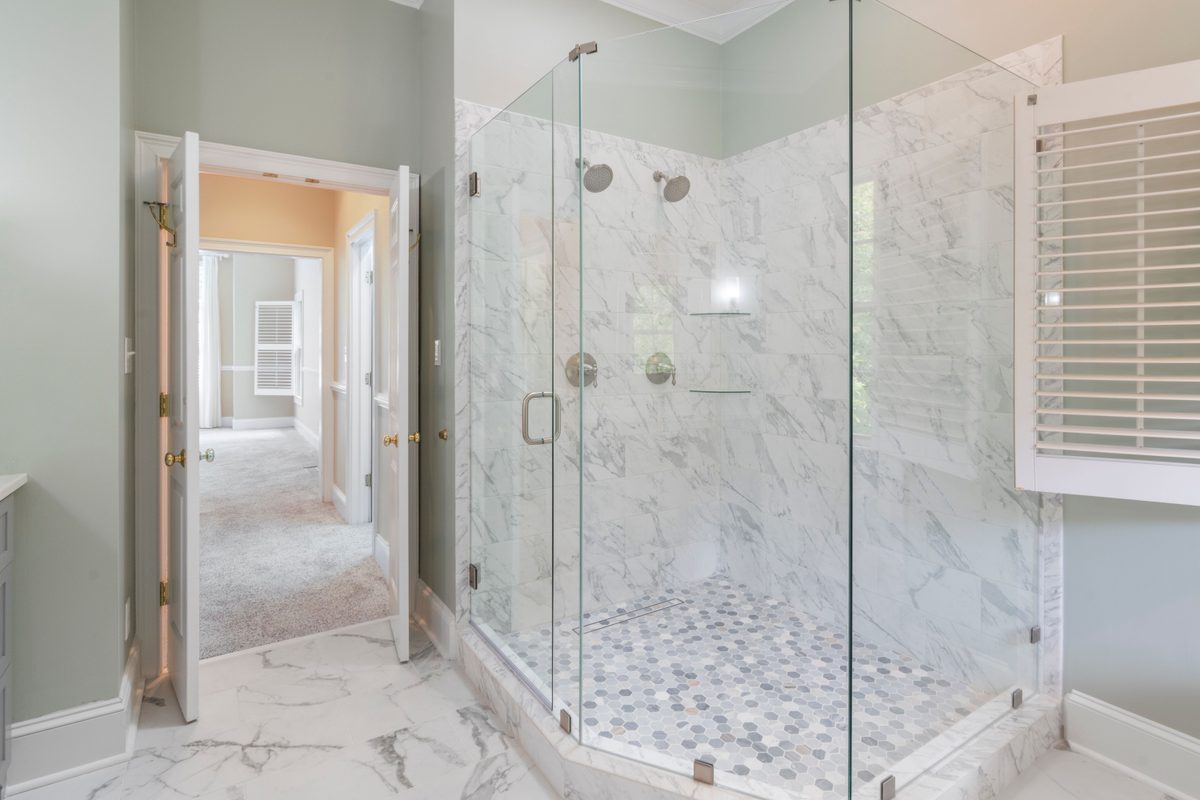
Frameless shower doors utilize thick tempered glass ranging from 3/8″ to 1/2″ thickness with minimal hardware. The absence of metal framing creates a modern, open aesthetic that showcases tile work and makes bathrooms appear larger.
Framed shower doors feature complete aluminum frames surrounding thinner 1/4″ glass panels. Semi-frameless doors include frames around enclosure edges while leaving the door panel mostly unframed, offering a middle-ground aesthetic.
Sliding doors consist of two or more overlapping glass panels that move along horizontal tracks. This bypass design eliminates outward swing requirements, making these doors ideal for compact bathroom layouts.
Pivot doors rotate on central pins installed at the top and bottom positions. Hinged doors mount to walls or frames with side hardware, and both styles require clearance space for the door swing path.
Glass material represents the largest cost component, accounting for 40-50% of total shower door expenses. Thicker glass panels used in frameless installations cost significantly more than standard 1/4″ glass found in framed designs.
Hardware components contribute 15-25% of total project costs. Premium finishes, including matte black and brushed brass, command higher prices than standard chrome or nickel options.
Consumer demand shapes shower door pricing and availability based on generational priorities and geographic location. Different age groups prioritize distinct features when selecting doors, while regional design trends influence which styles contractors stock and install most frequently.
Millennials represent 38% of homeowners undertaking bathroom projects, with annual renovation spending averaging $5,173. This demographic shows the strongest preference for contemporary designs, with 58% choosing frameless doors over traditional framed options.
Generation X homeowners allocate $4,521 annually toward renovations, and 55% prefer frameless or semi-frameless designs. Baby Boomers spend $3,595 yearly on home improvements, with 52% selecting traditional framed doors, prioritizing accessibility and cost-effectiveness.
West Coast markets demonstrate the highest adoption rates for contemporary frameless shower designs. Northeast regions show balanced preferences mixing traditional framed and modern frameless options, while Southeast markets maintain strong demand for framed doors.
Urban homeowners favor space-saving sliding doors due to smaller bathroom footprints typical in city residences. Rural homeowners lean toward traditional framed pivot or hinged doors that complement larger bathroom layouts.
Quality ranks as the top decision factor with a 95% importance score among homeowners. Consumers prioritize leak prevention and long-term satisfaction when comparing shower door options.
Price follows closely with a 92% importance score reflecting budget constraints and value assessment. Durability rates 78%, maintenance considerations 72%, and installation complexity 68% among decision-making priorities.
The cost difference between frameless and framed shower doors stems from glass thickness, hardware requirements, and installation complexity. Homeowners choosing between these options must weigh upfront investment against aesthetic preferences and long-term value considerations.
Frameless shower price begins at $1,000 for budget installations and extends beyond $5,000 for premium configurations. Mid-range frameless installations typically cost between $2,000 and $3,500, with the average project totaling $3,000.
These doors add measurable home value through modern aesthetics and perceived luxury. The thick tempered glass and minimal hardware create an open, contemporary appearance that appeals to buyers.
Framed shower price starts at $400 for basic installations and reaches $1,200 for premium options. Mid-range framed doors cost between $600 and $800, with average projects totaling $800.
Framed doors represent the most affordable shower enclosure option available to homeowners. The complete aluminum framing provides superior water containment while requiring less expensive 1/4″ glass panels.
Semi-frameless doors cost between $500 and $800 for budget installations and $1,200 to $1,800 for premium versions. Mid-range semi-frameless options fall between $800 and $1,200, averaging $1,150 per installation.
This style offers a compromise between frameless aesthetics and framed affordability. The partial framing reduces costs while maintaining a cleaner appearance than fully framed alternatives.
Understanding how specific components contribute to total shower door cost helps homeowners identify where budget adjustments can occur. Material selections, hardware quality, and installation requirements each play distinct roles in determining final project expenses.
Thicker 3/8″ and 1/2″ glass used in frameless designs costs significantly more than 1/4″ panels. The increased material expense reflects both higher manufacturing costs and improved structural integrity.
Thicker glass provides a premium feel and better durability than thinner alternatives. The substantial weight and clarity of thick tempered glass justifies higher prices for discerning homeowners.
Hardware quality directly impacts both initial shower door cost and long-term performance reliability. Premium hinges, handles, and mounting hardware resist corrosion while maintaining smooth operation through years of daily use.
Finish selection significantly influences hardware pricing, with specialty options commanding premium rates. Matte black and brushed brass finishes cost more than standard chrome but deliver distinctive aesthetic appeal.
Installation labor accounts for 25-35% of total project expenses for shower door installations. Professional installation typically ranges from $300 to $600, depending on door type and bathroom configuration.
Structural reinforcement, tile repair, and old door removal add $100 to $500 to projects. DIY installation for frameless shower doors creates safety risks and potential water damage from improper sealing.
Bathroom dimensions and layout configurations determine which door styles function properly in specific spaces. Available clearance, entry width requirements, and accessibility needs all influence both door selection and associated installation costs.
Sliding doors eliminate outward swing requirements, making them perfect for bathrooms with limited floor space. This space-saving design allows door operation without clearance zones in front of the shower enclosure.
Budget sliding doors cost between $500 and $700, mid-range options $700 to $1,000, and premium versions $1,000 to $1,500. These doors work particularly well for shower-tub combinations where pivot or hinged doors would require impractical clearance space.
Pivot and hinged doors provide full-width entry access superior to sliding door configurations. This wider opening benefits users with mobility devices or those requiring accessible bathroom remodel features for aging-in-place modifications.
Budget pivot and hinged doors range from $800 to $1,200, mid-range options $1,200 to $2,000, and premium installations $2,000 to $3,000. Sliding doors offer narrower entry widths due to overlapping panel design.
Frameless doors require precise professional installation due to heavy glass and minimal structural support. Wall studs must provide adequate anchoring strength, and measurements must achieve perfect accuracy to prevent leaks.
Framed doors install more quickly and easily due to complete structural framing that guides alignment. The metal frame compensates for minor wall irregularities while providing clear mounting points for installers.
Long-term ownership costs extend beyond initial purchase and installation expenses to include ongoing cleaning requirements and potential repairs. Different door types demand varying maintenance levels that influence the total cost of ownership over a shower door’s lifespan.
Frameless doors require less cleaning effort due to minimal hardware and the absence of metal frames. The smooth glass surfaces wipe clean easily without crevices where soap scum and mildew accumulate.
Framed doors collect buildup in metal channels and around rubber gaskets, requiring more intensive scrubbing. Sliding door bottom tracks accumulate residue that demands tedious cleaning, while pivot and hinged doors maintain cleaner operation without tracks.
Frameless doors treated with protective glass coatings maintain a clearer appearance with reduced water spotting. These treatments add upfront cost but deliver easier maintenance and better aesthetic retention throughout the door’s service life.
Untreated glass requires more frequent cleaning to prevent mineral deposit buildup and water stains. The protective coating investment often pays returns through reduced cleaning time and maintained visual appeal.
Professionals recommend a minimum 3/8″ glass thickness for frameless installations to ensure proper structural integrity. Thicker glass provides the necessary strength when metal framing does not support the panels.
Standard 1/4″ glass works acceptably for framed doors where the metal structure provides primary support. The surrounding frame allows thinner, more affordable glass while maintaining safety and durability standards.
Accurate budget planning requires understanding all cost components contributing to shower door projects. Homeowners must account for materials, labor, and potential additional work while balancing quality preferences against available funds.
Glass material costs consume 40-50% of total project budgets, regardless of the door type selected. Hardware accounts for 15-25% of expenses, with finish selection and quality level determining exact costs.
Installation labor represents 25-35% of the total shower door cost across all configurations. Additional work, including structural modifications and old fixture removal, adds 0-15% to final project totals.
Unexpected expenses frequently emerge during shower door installation when contractors discover wall reinforcement needs or water damage. These unforeseen issues can add hundreds of dollars to originally quoted prices.
Tile repair around shower openings and threshold modifications commonly arise during installations. Homeowners should maintain contingency funds equal to 15% of quoted prices to cover potential additional work.
Frameless doors suit modern design enthusiasts, Millennials, and Generation X homeowners, larger bathrooms, and high-end renovations. These installations justify premium pricing through aesthetic impact and perceived value addition.
Framed doors work best for budget-conscious homeowners, traditional design preferences, smaller bathrooms, and rental properties. Baby Boomers and cost-focused buyers appreciate framed doors’ practical benefits and affordable pricing.
The 2026 shower door prices reflect sustained market growth driven by increasing renovation spending and shifting consumer preferences. The global shower glass door market, valued at $18.8 billion in 2023 projects to reach $39.5 billion by 2034, demonstrating continued strong demand. North America holds 40% of the global market share, with Europe commanding 30% of worldwide sales. The 7.0% compound annual growth rate indicates robust consumer confidence in bathroom renovation investments despite economic uncertainties.
Understanding complete cost structures empowers homeowners to make informed decisions, balancing aesthetic goals against budget realities. Price transparency around glass thickness, hardware quality, and installation complexity helps buyers compare options and select doors matching their specific needs and financial parameters.
Different door types serve distinct market segments based on space constraints, design preferences, and available budgets. Whether prioritizing affordability through small bathroom remodel projects or investing in luxury frameless installations, homeowners benefit from comprehensive pricing knowledge before committing to purchases. Comparing shower replacement costs in Massachusetts in 2026 helps regional buyers understand local pricing factors. Exploring complete walk-in shower cost details provides additional context for full bathroom renovations beyond door installations alone.
Patriot Bath Remodeling brings 50+ years of combined experience to shower door installations across Massachusetts, Rhode Island, and Southern New Hampshire. The company offers free estimates, 3D design renderings, and comprehensive warranties backed by full licensing and insurance.
Whether you have your eye on sleek frameless glass or a budget-friendly framed design, Patriot Bath Remodeling can help you choose the right shower door for your space and your budget. Our team handles everything from glass selection to professional installation, so you get a leak-free, beautiful result that lasts. Get a free estimate today and find out how affordable your new shower doors can be.