Monthly Payments as Low as $99! | 1/2 OFF Labor on second Project

Key Takeaways
Choosing bathroom materials in New England means planning for more than style. Freeze-thaw cycles, humidity, and moisture exposure wear down the wrong choices fast.
Here’s what we break down: which materials hold up, what they cost, and how they fit the design trends homeowners want in 2026, so you can pick options that look good and last.
Design trends set the direction for material choices. Homeowners want a look that lasts, not a style that dates fast. These trends shape what goes into New England bathrooms this year.
Transitional design tops homeowner preference. 70% of homeowners will favor this timeless style over the next three years, per NKBA 2026. Neutrals dominate the color story too. 96% of NKBA survey respondents named neutrals as the most popular bath color choice.
Off-white is the most-chosen specific color, at 58% of homeowners. Sage green follows at 64%. Organic, natural design themes round out the look, preferred by 65% of homeowners heading into 2026.
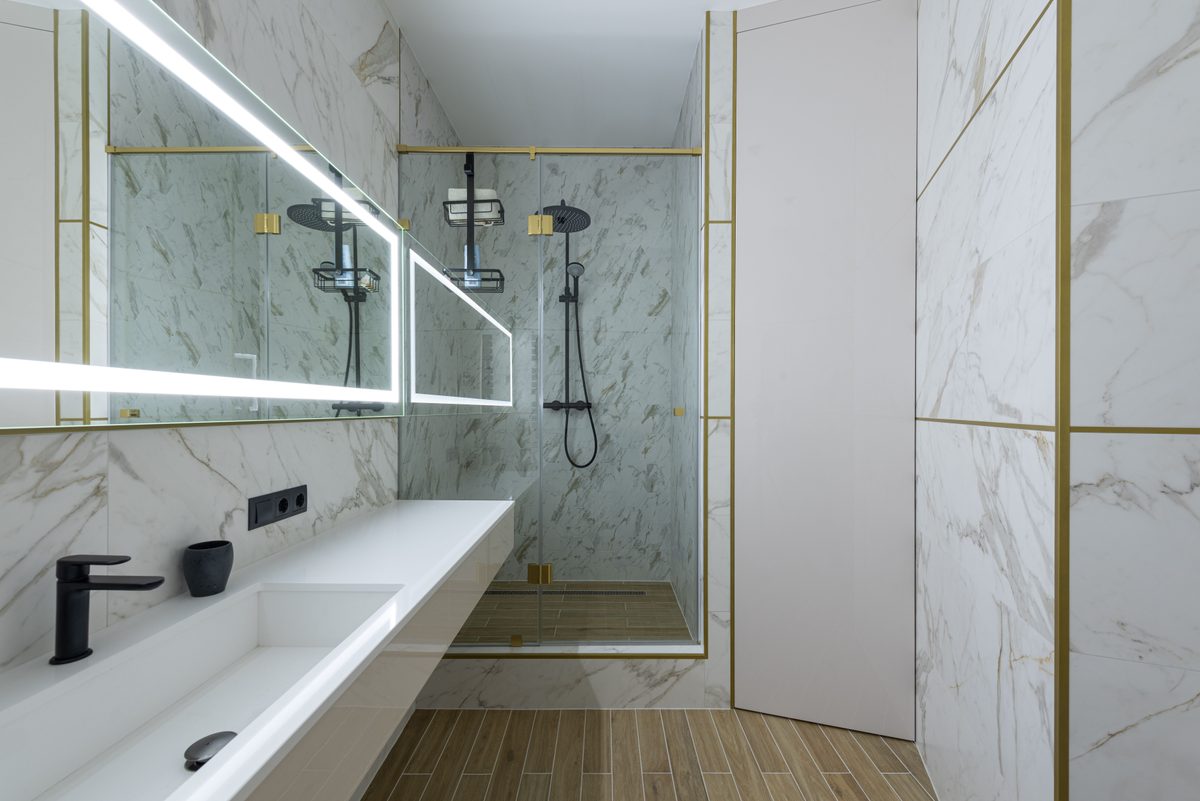
Grout lines are shrinking. 89% of NKBA 2026 respondents report rising demand for smaller or no grout lines. Large format flooring is set to lead the way, with 80% of respondents expecting it to dominate over the next three years.
Tile layout is shifting too. Horizontally stacked shower wall tile reached 18% adoption, per the 2025 Houzz Bathroom Trends Study. Storage details matter as well. 78% of homeowners chose soft-close drawers, and 62% picked wood-faced vanities, according to NKBA 2026.
Bathrooms are turning into wellness spaces. 77% of industry respondents expect hospitality-inspired features to be popular in 2026, per NKBA. 72% report homeowners are making more room for wellness-centered spaces, universal design, and extra storage.
This shift is already underway. 36% of already renovated bathrooms have added dedicated wellness features, per 2025 Houzz data.
New England weather punishes the wrong materials. Freeze-thaw cycles and high humidity break down anything that traps moisture. Material choice needs to match the climate, not just the design.
Porcelain handles freeze-thaw cycling without cracking. Natural stone does not fare as well. Trapped moisture inside stone can freeze and cause cracking or spalling.
Solid hardwood carries its own risk. It absorbs ambient moisture, which leads to swelling, cupping, and warping over time.
Wet zones expose weak seams and porous surfaces fast. Traditional paper-backed wallpaper absorbs ambient moisture in these areas, causing peeling, bubbling, and mold growth.
LVP flooring carries a similar risk at the seams. Water that gets under improperly sealed LVP seams, or poorly installed plank, can cause subfloor mold or damage.
Natural stone needs regular upkeep in this climate. Left unsealed or resealed too infrequently, it traps moisture in its pores. That trapped moisture can freeze, which causes cracking or surface spalling.
Flooring takes the most abuse in any bathroom. The right choice holds up to water, foot traffic, and freeze-thaw swings for decades. Here is how these options compare.
Porcelain tile performs well in wet, cold climates. It absorbs almost no water, under 0.5%, and lasts 50-plus years with proper installation. Material costs run $6 to $12 per square foot, with installed pricing between $8 and $43 per square foot.
Durability varies by grade. The PEI hardness scale rates porcelain tile, and PEI 4 or 5 tile holds up well under heavy residential traffic.
LVP costs less upfront and installs fast. Material pricing runs $1.50 to $10 per square foot, with installed pricing between $4 and $12 per square foot. Lifespan runs 15 to 25 years.
Quality drives that lifespan range. Thinner, budget-grade LVP lands at the low end, while thicker rigid core LVP lasts closer to 25 years.
Natural stone costs more and needs more upkeep. Material pricing runs $10 to $25 per square foot, with installed cost between $15 and $50-plus per square foot. It also requires resealing every one to three years.
| Material | Material Cost / sq ft | Installed Cost / sq ft | Lifespan |
|---|---|---|---|
| Porcelain Tile | $6 to $12 | $8 to $43 | 50-plus years |
| LVP | $1.50 to $10 | $4 to $12 | 15 to 25 years |
| Natural Stone | $10 to $25 | $15 to $50-plus | Varies; needs resealing every 1 to 3 years |
Hardwood carries its own limits. Engineered hardwood is not advised for any zone with standing water exposure.
Shower walls take constant water exposure. The right material keeps that water out for decades instead of years. Here is how the main options compare.
Tile lasts 50-plus years, but the tile itself is not waterproof. Tile and grout are water permeable, so the lifespan depends on proper substrate waterproofing behind the tile.
Shape trends are shifting too. Rectangular shower floor tile leads at 29%, followed by hexagonal at 26% and square at 22%, per 2025 Houzz data.
Engineered quartz shower wall panels skip the grout lines entirely. Material costs run $50 to $100 per square foot, giving homeowners a durable, low-maintenance surface.
Acrylic shower surrounds last 15 to 25 years. That is a shorter lifespan than tile, and acrylic scratches more easily than solid surface or quartz.
| Material | Lifespan | Notes |
|---|---|---|
| Porcelain / Ceramic Tile | 50-plus years | Needs proper substrate waterproofing behind the tile |
| Engineered Quartz Panels | Long-lasting | $50 to $100 per sq ft materials; low maintenance, no grout lines |
| Acrylic | 15 to 25 years | Scratches more easily than solid surface or quartz |
Countertops face daily wear plus constant moisture. Some materials handle both well. Others fall short. Here is what holds up.
Engineered quartz costs $50 to $200 per square foot installed. Most homeowners land between $70 and $100 per square foot. That price buys a surface built to resist stains, scratches, and moisture for the long run.
Cultured marble weighs 40% less than natural stone, which simplifies installation. It also costs up to 50% less at wholesale than engineered quartz. The tradeoff is lifespan: cultured marble lasts 15 to 25 years, shorter than quartz.
Not every stone performs the same. Granite resists scratches and impact well, but marble and limestone are softer and prone to etching, making them a weaker choice for busy bathrooms.
| Material | Cost | Notes |
|---|---|---|
| Engineered Quartz | $50 to $200 per sq ft installed; most pay $70 to $100 | Resists stains, scratches, and moisture |
| Cultured Marble | Up to 50% less than quartz at wholesale | 15 to 25 year lifespan; 40% lighter than natural stone |
| Granite | Varies by slab | Scratch and impact resistant; marble and limestone are softer and prone to etching |
Budget, durability, and style pull in different directions. Homeowners rarely get to maximize all three. Understanding the tradeoffs makes the decision easier.
Midrange bathroom remodels deliver an 80% national average ROI, the highest rate since 2007, per the 2025 Cost vs. Value Report. Spending has climbed too. Median remodel cost rose from $13,500 in 2022 to $15,000 in 2023, an 11% increase.
Maintenance costs add up fast with the wrong material. High-maintenance natural stone in a busy family bathroom risks costly early failures. Homeowners are catching on. 43% now favor highly durable materials over cheaper, higher upkeep options, per 2025 Houzz data.
Durability and style are not competing goals. Porcelain tile and engineered quartz, the two most durable options covered above, both support the neutral, transitional look most homeowners want. Large format tile and minimal grout lines, already trending in 2026 designs, pair naturally with porcelain’s size flexibility and quartz’s seamless finish. Choosing for durability does not mean sacrificing the current look.
Layout drives material choice as much as style does. Space, lighting, and accessibility all shape what goes into the final design. Here is what homeowners are prioritizing.
Space allocation now tops the priority list. 89% of homeowners rank it as a major concern in the primary bath, per NKBA 2026. The shower is winning that space. 55% of respondents say a larger shower now matters more than having a bathtub.
Showers are growing to match. The 2025 Houzz study recorded a 39% increase in shower size. Homeowners are finding room by expanding the whole bathroom footprint, something 62% are doing. Wet rooms are part of that shift too, reaching 16% of renovated bathrooms.
Lighting quality ranks as a major priority for 91% of respondents, per NKBA 2026. Task lighting is non-negotiable in that plan, with 92% agreeing it must always be included.
Homeowners are layering multiple light sources to get there. Recessed lighting appeared in 40% of projects that upgraded lighting. Sconces followed at 34%, and lighted mirrors at 22%, per 2025 Houzz data.
Accessibility is becoming a standard design consideration, not a special request. 32% of homeowners already consider aging-in-place features mainstream, and another 48% say those features are approaching mainstream, per NKBA 2026.
The need is showing up in real projects. 66% of homeowners address special needs during a bathroom remodel, per Houzz 2026.
Style and durability are not separate decisions. Every material covered here, porcelain tile, engineered quartz, cultured marble, does double duty: it withstands New England’s freeze-thaw climate and supports the neutral, transitional look homeowners want in 2026.
The strongest remodels start with climate-resilient materials, then build the layout, lighting, and accessibility features around them. Get the foundation right, and the design trends follow naturally.
Patriot Bath Remodeling brings over 50 years of combined experience to homeowners across Massachusetts, Rhode Island, and Southern New Hampshire. From durable porcelain tile to seamless engineered quartz, our team helps you choose bathroom materials that hold up to New England’s climate and match the look you want. Financing starts at $99 a month, and every project includes a lifetime warranty and a price match guarantee. Call [PHONE NUMBER NEEDED] or request your free estimate today to start your remodel with a team you can trust.
Porcelain tile performs strongly against freeze-thaw cycling and humidity. It absorbs almost no water, under 0.5%, and lasts 50-plus years with proper installation. Engineered quartz is the closest competitor for countertops and shower walls, since it resists moisture and stains with little upkeep. Natural stone and solid hardwood are more vulnerable to New England’s freeze-thaw swings.
Porcelain tile material costs run $6 to $12 per square foot, with installed pricing between $8 and $43 per square foot depending on pattern and labor. Midrange bathroom remodels overall deliver an 80% national average ROI, the highest rate since 2007, per the 2025 Cost vs. Value Report. Median remodel spend rose from $13,500 in 2022 to $15,000 in 2023, an 11% increase.
LVP flooring works well as a budget-friendly option, with material costs from $1.50 to $10 per square foot and a lifespan of 15 to 25 years. It handles moisture reasonably well as long as seams are sealed properly, since water that gets under improperly sealed seams can cause subfloor mold or damage. Thicker, rigid-core LVP lasts closer to 25 years, while thinner, budget-grade LVP sits at the low end of that range.
Engineered quartz handles humidity and daily wear with little maintenance, running $50 to $200 per square foot installed. Cultured marble offers a lighter, lower-cost alternative at up to 50% less than quartz at wholesale, though its 15 to 25 year lifespan is shorter. Granite resists scratches and impact well, while marble and limestone are softer and prone to etching in humid, high-traffic bathrooms.
Walk-in showers with porcelain or engineered quartz surfaces provide slip-resistant, low-maintenance surfaces suited to aging-in-place remodels. 66% of homeowners address special needs during a bathroom remodel, and demand for these features keeps climbing, with 32% of homeowners already considering aging-in-place features mainstream and another 48% saying they are approaching mainstream. Grab bars, barrier-free entry, and durable, easy-clean materials all support safety and independence over the long term.