Monthly Payments as Low as $99! | 1/2 OFF Labor on second Project
The walk-in shower vs bathtub debate influences both daily comfort and long-term property value for homeowners. Understanding how each fixture affects buyer appeal requires examining market trends, demographic preferences, and return on investment. Modern buyers increasingly prioritize accessibility and spa-like features, yet families with children still value bathtubs for practical needs. Strategic fixture choices in primary and secondary bathrooms maximize resale value and bathroom renovation potential across diverse buyer segments.
Key Takeaways
Walk-in showers and bathtubs represent fundamentally different approaches to bathroom design, each serving distinct functional needs. Walk-in showers emphasize accessibility and modern aesthetics, while bathtubs prioritize relaxation and family utility. Understanding their defining characteristics helps homeowners evaluate which fixtures best align with resale value and bathroom renovation goals.
Material selection and construction methods differentiate these fixtures beyond basic function and visual appeal. Walk-in showers typically feature seamless tile or solid surface construction with frameless glass panels. Bathtubs range from standard acrylic alcove models to luxury freestanding designs in cast iron or stone resin.
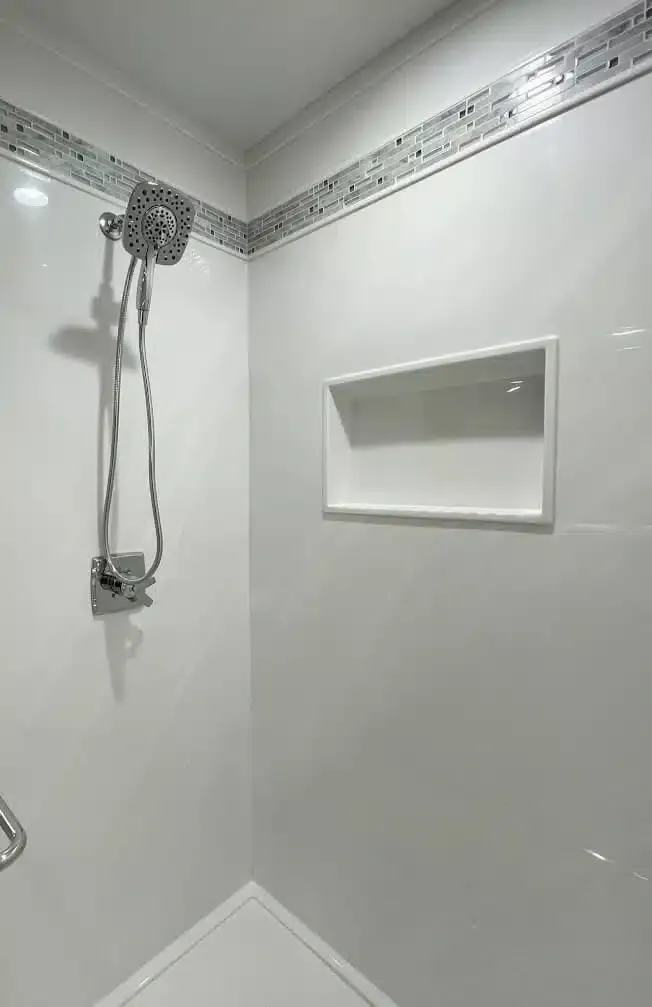
Walk-in showers are fully open, curbless or low-curb spaces without traditional enclosure doors. These fixtures feature seamless tile or solid surface construction designed for modern accessibility and style. Zero-threshold entry eliminates tripping hazards, while seamless construction creates a visually expansive bathroom environment.
Optional frameless glass panels provide water containment without closing off the space. Sloped flooring directs water toward drains, and built-in benches with recessed niches enhance functionality. Choosing the right walk-in shower design requires careful consideration of these integrated features.
Bathtub depths vary from 14 inches for standard models to 20 inches or more for soaking tubs. This depth variation accommodates different user preferences, from quick bathing to full-body immersion for relaxation. Material choices significantly impact durability, heat retention, and overall aesthetic appeal in bathroom designs.
Acrylic bathtubs offer lightweight construction and affordability, while cast iron provides exceptional heat retention and longevity. Stone resin bathtubs combine modern aesthetics with durability, making them popular in luxury renovations. Bathtub replacement costs depend heavily on material selection and installation complexity.
Walk-in tub combos combine a low-entry tub with a watertight door and built-in shower functionality. These fixtures address aging-in-place needs by offering superior safety without sacrificing bathing flexibility. Wet rooms are fully waterproofed spaces where the shower integrates seamlessly without physical barriers.
Walk-in tub combos range from $8,630 to $12,000 or more, representing a significant investment in accessibility. Wet rooms cost between $15,000 and $30,000 or more, requiring expert waterproofing and ventilation systems. Walk-in showers hold 45% market share, demonstrating their dominance in contemporary bathroom renovations.
Consumer preferences for bathroom fixtures shift dramatically across age groups, geographic regions, and living environments. Generational differences in lifestyle priorities create distinct patterns in fixture selection during home renovations. Regional climate conditions, housing stock age, and cultural preferences further influence whether homeowners choose showers or tubs.
Urban density and rural spaciousness also affect bathroom design decisions based on available square footage. Understanding these demographic and regional variations helps homeowners align renovation choices with local buyer expectations. Strategic fixture selection considers both personal needs and market-driven resale value bathroom renovation principles.
65% of Millennials prefer modern walk-in showers, prioritizing contemporary aesthetics and water efficiency in bathroom design. Only 22% of this demographic prefer bathtubs, typically those with young children requiring supervised bathing. Generation X demonstrates more balanced preferences, with 48% favoring walk-in showers and 38% choosing bathtubs.
Baby Boomers value bathtubs more highly, with 52% preferring them for relaxation and therapeutic purposes. Aging-in-place remodeling projects increasingly incorporate walk-in showers with safety features like grab bars. Generational preferences directly influence buyer expectations when homes enter the resale market.
The Northeast region shows 45% preferring bathtubs and 38% preferring walk-in showers, reflecting older housing stock. Cold climates favor bathtubs for their superior heat retention during extended soaking sessions. The Southeast region displays balanced preferences, with 42% choosing walk-in showers and 42% selecting bathtubs.
West Coast buyers strongly favor walk-in showers at 58%, with only 28% preferring bathtubs in their homes. Environmental consciousness and modern design trends drive this regional preference for water-efficient shower systems. Regional variations underscore the importance of understanding local market expectations before committing to fixture choices.
Urban settings show 68% of homeowners preferring walk-in showers due to space-efficient design in smaller bathrooms. Compact living environments prioritize functionality and modern aesthetics over traditional bathtub installations. Rural settings maintain stronger bathtub preferences at 48%, with homeowners utilizing larger bathroom footprints.
Spacious rural homes accommodate both walk-in showers and bathtubs without compromising overall bathroom functionality. Urban buyers value minimalist design and quick functionality, while rural buyers appreciate relaxation-focused bathroom features. These setting-based preferences affect resale value strategies depending on property location and target buyer demographics.
Walk-in showers deliver superior accessibility, modern aesthetics, and exceptional design flexibility in bathroom renovations. These fixtures eliminate barriers for users with mobility limitations while creating visually expansive bathroom environments. However, potential drawbacks include water containment challenges and higher initial installation costs compared to standard options.
Understanding both walk-in shower benefits and limitations helps homeowners make informed renovation decisions aligned with resale goals. Design considerations affect long-term satisfaction, maintenance requirements, and overall property value when homes eventually enter the market. Careful planning addresses common disadvantages while maximizing the considerable advantages these fixtures offer.
Walk-in showers yield 70% to 80% ROI, making them valuable investments in primary bathroom upgrades. Superior accessibility features like zero-threshold entry accommodate users of all mobility levels without physical barriers. Walk-in showers achieve a Joy Score of 9.8 out of 10, indicating exceptionally high homeowner satisfaction.
Modern, minimalist aesthetics visually expand bathroom spaces, making even smaller rooms feel more spacious and luxurious. Easy cleaning maintenance requires fewer efforts compared to traditional shower-tub combinations with multiple surfaces. Customizable designs fit any bathroom layout, allowing personalized configurations that match specific homeowner preferences.
Walk-in showers range from $4,000 to $7,000 for budget prefabricated units with standard finishes. Mid-range installations cost between $8,000 and $13,000, featuring ceramic or porcelain tile with frameless glass. Premium walk-in showers exceed $14,000 to $20,000 or more, incorporating custom mortar beds and luxury fixtures.
Walk-in shower remodels face potential water containment issues without proper design and installation expertise. Open designs allow heat to escape rapidly, making the shower space feel colder during use. Installation requires waterproofing expertise to prevent mold growth and structural damage, increasing initial project costs.
Bathtubs excel at providing relaxation, therapeutic benefits, and essential functionality for families with young children. Heat retention properties, especially in cast iron and stone resin models, create comfortable soaking experiences. However, bathtubs consume significant water, occupy substantial floor space, and present accessibility challenges for elderly users.
Evaluating bathtub advantages against their limitations helps homeowners determine appropriate placement in renovation strategies. Strategic bathtub retention in secondary bathrooms protects resale value while primary bathroom upgrades prioritize modern preferences. Understanding market share trends and buyer demographics guides fixture decisions that balance personal needs with investment protection.
Bathtubs hold 25% market share, reflecting their continued importance despite declining popularity among certain demographics. These fixtures promote stress relief, muscle recovery, and therapeutic relaxation through extended soaking sessions. Freestanding bathtubs serve as sculptural design focal points, adding visual interest to spacious primary bathrooms.
Families with young children depend on bathtubs for safe, supervised bathing of infants and toddlers. Exceptional heat retention in cast iron and stone resin models maintains comfortable water temperatures throughout bathing. Bathtubs remain essential fixtures for preserving broad buyer appeal, particularly among families evaluating potential homes.
Bathtub water consumption ranges from 40 to 80 gallons per use, significantly exceeding shower water efficiency. High water usage raises utility costs and environmental concerns, especially in drought-prone regions with conservation mandates. Accessibility challenges for elderly or mobility-impaired users create safety hazards without proper support modifications.
Heavy materials like cast iron may require floor reinforcement to support weight without structural damage. Significant floor space requirements for freestanding models limit design flexibility in smaller bathrooms. Regular cleaning maintenance proves more labor-intensive compared to streamlined walk-in shower surfaces with fewer crevices.
Bathtubs cost between $500 and $2,000 for budget standard acrylic alcove installations with basic features. Mid-range contemporary freestanding acrylic bathtubs range from $2,000 to $4,000, offering improved aesthetics and comfort. Premium luxury bathtubs in stone resin or cast iron exceed $5,000 to $15,000 or more.
Bathtub replacement cost varies significantly based on material selection, size, and installation complexity in existing spaces. Installation expenses increase when floor reinforcement or plumbing relocation becomes necessary during bathroom renovations. Total project costs must account for both fixture prices and professional installation labor requirements.
Walk-in showers and standard enclosures serve similar basic functions but differ significantly in aesthetics and investment value. Standard enclosures use prefabricated systems with defined bases, wall surrounds, and doors in alcove configurations. Walk-in showers offer superior design flexibility, accessibility features, and luxury appeal compared to standard enclosure options.
Cost differences between these options influence fixture selection based on budget constraints and market positioning goals. Understanding return on investment variations helps homeowners allocate renovation budgets strategically across multiple bathrooms. Tub to shower conversion decisions depend on existing bathroom configurations and intended buyer demographics.
Standard enclosures cost between $300 and $1,000 for basic fiberglass prefabricated units with sliding doors. Mid-range quality acrylic kits range from $1,000 to $3,000, offering improved durability and appearance. Premium semi-custom options with upgraded glass doors reach $3,000 to $8,500, bridging gaps toward walk-in aesthetics.
Standard enclosures offer 60% to 70% ROI, providing solid returns without premium investment requirements. Installation requires only 1 to 3 days, minimizing disruption to household routines during bathroom renovations. Standard enclosures hold 20% market share, serving practical needs in budget-conscious renovations and rental properties.
Fiberglass materials can scratch or dull over time, requiring eventual replacement to maintain an attractive bathroom appearance. Quick installation timelines make standard enclosures ideal for rental properties requiring fast, cost-effective bathroom updates. Excellent water containment features prevent leakage issues common in poorly designed walk-in shower installations.
Standard enclosures in primary bathrooms may detract from luxury home value by signaling budget-conscious construction choices. Mid-to-high-end homes require walk-in showers in primary bathrooms to meet buyer expectations for modern amenities. Secondary or tertiary bathrooms benefit from standard enclosures where budget and durability concerns outweigh luxury considerations.
Aging-in-place renovations strongly favor walk-in showers with accessibility features over standard enclosure configurations with barriers. Real estate investors maximizing rental property returns often choose durable standard enclosures for cost-effective bathroom functionality. Walk-in showers position homes competitively in markets where buyers expect contemporary design and accessibility features.
Bathroom fixture choices directly influence buyer perception, market positioning, and ultimate sale prices when homes enter markets. Strategic renovation decisions balance personal preferences with data-driven resale value bathroom renovation principles for maximum returns. Understanding buyer priorities helps homeowners allocate budgets effectively across primary and secondary bathroom upgrades.
Market research reveals that fixture choices carry different weights depending on bathroom location within the home. Primary bathroom upgrades yield higher returns when incorporating luxury walk-in showers that appeal to adult homeowners. Secondary bathrooms protect family buyer appeal by maintaining functional bathtubs for children’s bathing needs.
Consumer priorities rank cost at 28%, style and aesthetics at 24%, and resale value at 20%. Accessibility concerns represent 18% of buyer priorities, while maintenance considerations account for 10% of decision factors. Walk-in showers address multiple priorities simultaneously, explaining their growing popularity in primary bathroom renovations.
Modern walk-in showers signal quality construction and contemporary design sensibility to prospective buyers evaluating homes. Accessibility features expand potential buyer pools by accommodating aging-in-place needs without institutional appearances. Evaluating whether bathroom remodels deliver value requires understanding these multifaceted buyer priorities.
Removing the only bathtub in a home can alienate families with young children who require it. Real estate professionals consistently advise maintaining at least one functional bathtub to preserve broad market appeal. Families with infants and toddlers often eliminate homes lacking bathtubs from consideration during house searches.
Bathtubs in secondary bathrooms provide practical functionality without compromising primary bathroom luxury upgrade investments. Strategic retention protects resale value by accommodating diverse buyer demographics with varying household compositions. Homes offering both modern walk-in showers and traditional bathtubs appeal to the widest possible buyer range.
Midrange bathroom remodels recoup 60% to 70% of costs at resale, making strategic fixture choices important. Primary bathrooms should feature luxury walk-in showers with premium finishes to justify higher home asking prices. Secondary bathrooms maintain functional bathtubs, balancing family appeals with budget-conscious renovation strategies across multiple spaces.
Quality materials and professional installation prevent premature failure, protecting long-term value and avoiding costly future repairs. Neutral design choices appeal to broader buyer preferences, avoiding highly personalized aesthetics that limit market appeal. Home-selling tips emphasize balanced bathroom configurations that demonstrate both modern luxury and practical family functionality.
Expert recommendations balance market trends with practical considerations to maximize bathroom renovation return on investment. Professional designers and real estate agents consistently advise strategic fixture placement based on bathroom hierarchy and buyer expectations. Understanding market valuation trends helps homeowners make data-driven decisions that protect and enhance property values.
Industry forecasts reveal continued walk-in shower market growth, projected to expand from $8.2 billion in 2021 to $14.5 billion by 2026. Traditional bathtub markets grow more slowly, valued at $6.3 billion with modest 1.7% annual growth rates. These trends inform renovation strategies without dictating rigid fixture choices that ignore individual home characteristics.
Primary bathrooms should feature modern luxury walk-in showers that appeal to adult buyers seeking spa-like experiences. High-end finishes, frameless glass, and premium fixtures justify higher asking prices for homes in competitive markets. Secondary bathrooms should maintain bathtubs for family appeal, accommodating young children, and preserving broad buyer interest.
Standard enclosures work effectively for secondary or tertiary bathrooms where budget considerations limit renovation spending capacity. Invest in walk-in showers for primary bathrooms, aging-in-place renovations, or mid-to-high-end home preparation for sale. Strategic fixture placement across multiple bathrooms optimizes total renovation budgets while maximizing market appeal and resale returns.
The United States bathroom remodeling market reaches approximately $68 billion, reflecting strong homeowner investment in upgrades. Global walk-in shower markets grew from $8.2 billion in 2021 to $14.5 billion in 2026. The walk-in shower markets project 12.1% compound annual growth rate over the next five years.
Traditional bathtub markets reach $6.3 billion with projected 1.7% compound annual growth rates through 2031. Market growth disparities indicate shifting buyer preferences toward accessibility, modern aesthetics, and water-efficient bathroom fixtures. Understanding these trends helps homeowners align renovation investments with evolving buyer expectations in competitive real estate markets.
Strategic bathroom fixture choices require balancing modern design trends with enduring buyer preferences across diverse demographics. Walk-in showers dominate market growth and appeal strongly to adult buyers seeking accessibility and contemporary aesthetics. However, retaining functional bathtubs in secondary bathrooms protects family buyer appeal and preserves broad market reach.
Successful resale value bathroom renovation strategies recognize that different bathrooms serve distinct purposes within home hierarchies. Primary bathroom luxury upgrades justify premium asking prices, while practical secondary bathroom fixtures demonstrate thoughtful family planning. Understanding regional preferences, demographic trends, and market valuations enables homeowners to make informed renovation investments.
Patriot Bath Remodeling helps homeowners throughout Massachusetts, Rhode Island, and Southern New Hampshire navigate these critical fixture decisions. Our experienced team understands local market preferences and designs bathroom renovations that maximize both personal satisfaction and resale value. With over 50 years of combined expertise, we guide clients through material selection and design choices that align with their unique goals.
Whether you are leaning toward a sleek walk-in shower or holding onto a bathtub for your family’s needs, the right choice starts with a plan. At Patriot Bath Remodeling, our team brings over 50 years of combined experience helping South Shore Massachusetts, Greater Boston, Rhode Island, and New Hampshire homeowners make smart renovation decisions that look great and pay off at resale.
We will walk you through your options, match the right fixtures to your home and budget, and handle the installation from start to finish. Financing is available with monthly payments as low as $99, and every project comes with our quality guarantee. Contact our bathroom remodeling experts today for a free consultation and discover how the right fixture choices protect your investment while enhancing daily comfort.