Monthly Payments as Low as $99! | 1/2 OFF Labor on second Project

Key Takeaways
Bathroom safety becomes a real concern as people age. Wet tile, high tub walls, and tight layouts create hazards that most younger homeowners never think about. The right upgrades — from grab bars and non-slip flooring to a modern shower surround or waterproof shower wall panels — can prevent serious injuries and help seniors live independently at home. This guide covers the most effective accessible bathroom features, what they cost, and how to choose them based on actual mobility needs. Every recommendation here is grounded in safety research and real-world aging-in-place design.
The bathroom is the most dangerous room in the house for older adults. Slick surfaces, narrow spaces, and fixtures designed for younger bodies create daily fall risks that get worse over time. Understanding those risks is the first step toward fixing them.
One in four Americans aged 65 and older falls every year, according to the CDC. Bathrooms rank among the highest-risk areas in any home. The combination of water on hard surfaces, raised tub and shower surround thresholds, and a lack of support points creates a perfect setup for slips and falls. Stepping over a standard 4- to 6-inch shower curb is enough to cause a loss of balance. So is reaching for a shampoo bottle on a high shelf or standing on soaked tile with bare feet.
Falls are a leading cause of injury — and loss of independence — among older adults. Many seniors who fall in the bathroom never fully recover their confidence or mobility. The injuries often lead to hospitalization, reduced activity, and a faster decline in overall health.
You do not need a full renovation to make a bathroom safer. Research shows that targeted home modifications reduce in-home falls by nearly 40%. That includes simple changes like adding grab bars, improving lighting, and replacing a dated tub and shower surround with a low-threshold entry.
A review of fall-prevention studies found that 65% confirmed the effectiveness of home modifications in reducing falls, improving functional independence, and saving money on medical costs. One study found that diagnostic home visits paired with targeted modifications led to 31% fewer falls in the following year. These are not expensive, complicated projects. They are affordable, specific fixes aimed at the exact moments when falls happen — stepping in, stepping out, standing up, and reaching.
Not every senior faces the same challenges, so accessible bathroom design is not one-size-fits-all. Arthritis in the hands makes traditional knob faucets painful or impossible to turn. Lever-style handles solve that problem instantly. Reduced grip strength also makes it harder to open heavy shower doors or hold onto smooth surfaces, which is why textured grab bars and easy-to-clean acrylic shower walls matter more than most people realize.
Seniors who use a cane or walker need doorways between 32 and 36 inches wide — standard bathroom doors are only 24 to 30 inches, too narrow for most mobility aids. Wheelchair users need a vanity height of 30 to 34 inches with open knee clearance underneath. Low vision makes it hard to see edges, steps, and controls, so high-contrast colors and even lighting become safety features rather than style choices. Bathroom wall panels in lighter tones with contrasting trim help users see where surfaces begin and end. Choosing waterproof shower wall panels with a matte or satin finish adds both slip resistance and visual clarity compared to glossy tile.
Accessible design is not just about meeting code. It is about building a space that works safely for a real person with real physical limitations — today and five years from now. Four principles drive every good decision: adequate space, slip resistance, proper reach range, and visibility.
ADA standards set useful minimums, but real accessibility goes further. A transfer shower compartment requires at least 36 by 36 inches. A roll-in shower needs 60 by 30 inches of clear interior space with enough room outside for wheelchair maneuvering. Wheelchair users also need a 60-inch turning radius inside the bathroom and an entry width of at least 36 inches to get into the shower without twisting or backing up.
These numbers matter even if no one in the household uses a wheelchair right now. Mobility changes. A shower built to these dimensions today works for someone using a walker next year or a shower chair five years from now. Planning for a tub and shower surround replacement is the right time to think bigger — once the walls are open, upsizing costs far less than retrofitting later.
A beautiful bathroom floor means nothing if it sends someone to the emergency room. For wet areas, look for flooring and surfaces with a slip resistance coefficient of 0.6 or higher. Textured porcelain tiles — particularly smaller formats with more grout lines — offer strong traction because the grout itself creates additional grip. Rubber flooring provides exceptional traction plus cushioning that reduces injury severity if a fall does happen.
This principle applies to walls, too. Glossy tile looks sharp but offers no grip when someone reaches out for balance. Acrylic shower walls with a matte or lightly textured finish give hands something to press against. Waterproof shower wall panels in textured finishes serve double duty — they keep moisture out of the wall cavity and provide a safer surface than smooth, polished alternatives.
If a senior has to stretch, lean, or twist to reach a faucet handle or soap dish, the design has failed. ADA guidelines require shower controls and spray units to sit at least 1.5 inches above grab bars and within accessible reach. Handheld showerhead units must be reachable within 48 inches above the shower floor — low enough for a seated user to grab without straining.
Outside the shower, every fixture needs a clear floor space of at least 30 by 48 inches in front of it. That applies to the toilet, the sink, and the shower entry. This is the space a person needs to approach, turn, and use the fixture safely — whether standing, using a walker, or seated in a wheelchair. When choosing a new shower surround, pick a system with built-in niches or shelving positioned between hip and shoulder height. Bathroom wall panels with integrated storage keep daily items within arm’s reach and eliminate the need for freestanding caddies that tip, fall, and create clutter on the floor.
Poor lighting hides edges, wet spots, and obstacles. In an accessible bathroom, aim for 70 to 100 lumens per square foot — significantly brighter than what most standard bathrooms provide. Layered lighting works best: overhead fixtures for general illumination, task lighting near the mirror, and low-level path lighting to guide nighttime trips.
Motion-activated lights and plug-in night lights are simple additions that prevent one of the most common fall scenarios — a senior navigating a dark bathroom at 2 a.m. High contrast between surfaces also matters. A white grab bar on a white wall disappears for someone with low vision. Choose fixtures and trim that stand out against the surrounding surface. Light-colored waterproof shower wall panels paired with darker grab bars and controls create visual separation that helps aging eyes identify exactly where to step and where to hold on.
This is where planning turns into action. The features below cover every major fixture and surface in the bathroom — grab bars, flooring, shower design, toilets, sinks, lighting, and storage. Each one targets a specific fall risk or mobility barrier.
Grab bars do more than any other single upgrade to prevent bathroom falls. But a grab bar in the wrong spot is almost as useless as no grab bar at all. Location, height, and anchoring all matter.
Toilet-area grab bars should be mounted horizontally at 33 to 36 inches above the finished floor. The side wall bar needs a minimum length of 42 inches to give the user something to grip during both sitting and standing. This placement lets a person push up or lower down with control instead of relying on the toilet paper holder, the vanity edge, or sheer momentum.
ADA standards require grab bars on three walls in standard shower compartments that do not include a seat. Each bar must extend across the side wall to the entry and sit no more than 6 inches from adjacent walls, all at the same height. In transfer showers, bars go on the back wall and the side wall farther from the entry. When replacing a tub and shower surround, this is the ideal time to install blocking inside the wall so bars anchor into solid framing rather than just drywall.
Towel bars are not engineered for load. A properly rated grab bar supports a minimum of 250 pounds of vertical or horizontal force without permanent deformation. Most quality bars are rated between 250 and 500 pounds. They use a standard 1.5-inch diameter made from 18-gauge stainless steel — designed to be gripped under stress. Cost is low: $50 to $200 per bar installed for basic models, or $200 to $350 with full professional installation. A towel bar that pulls out of the wall during a slip can turn a recoverable stumble into a serious injury.
Flooring is the second most impactful safety decision after grab bars. The goal is traction without raised edges that catch a foot or a wheel.
Textured porcelain or ceramic tile with a COF of 0.6 or above is the standard recommendation for wet bathroom floors. Slip-resistant luxury vinyl plank and tile with textured finishes offer a more affordable alternative that is also water-resistant and softer underfoot. Inside the shower, textured fiberglass is common in prefabricated shower pans and provides a reliable grip. Acrylic shower walls paired with a textured pan base create a consistent, easy-to-clean interior without the grout maintenance that tile demands.
Loose rugs and mats shift underfoot on wet tile. That movement is a leading cause of bathroom falls. Non-slip flooring materials built into the floor surface are always safer than removable mats. If a mat is used, it must have a heavy rubber backing and suction grip. The better solution is to eliminate the need for mats by choosing slip-rated flooring from the start.
The shower is where most bathroom falls happen. Three upgrades make the biggest difference: eliminating the threshold, adding seating, and switching to a handheld showerhead.
A standard shower curb of 4 to 6 inches is the most common tripping hazard in the bathroom. A curbless zero-entry design eliminates it. Proper installation requires a floor slope of 1/4 inch per foot toward the drain. Linear drains or trench drains are preferred for a flush transition. If zero-entry is not feasible, a low-profile curb of 2 to 4 inches offers an easier step-over. Waterproof shower wall panels work well in curbless designs because they create a seamless, watertight enclosure without relying on grout joints that can crack or leak over time.
About 40% of walk-in shower remodels now include built-in seating. Molded seats typically hold 300 pounds. ADA-compliant folding seats must be wall-mounted, extend to within 3 inches of the shower entry, and fold up when not in use. Installation runs $1,000 to $3,000, depending on the design and wall structure. A bench turns showering from a balancing act into a seated, stable activity.
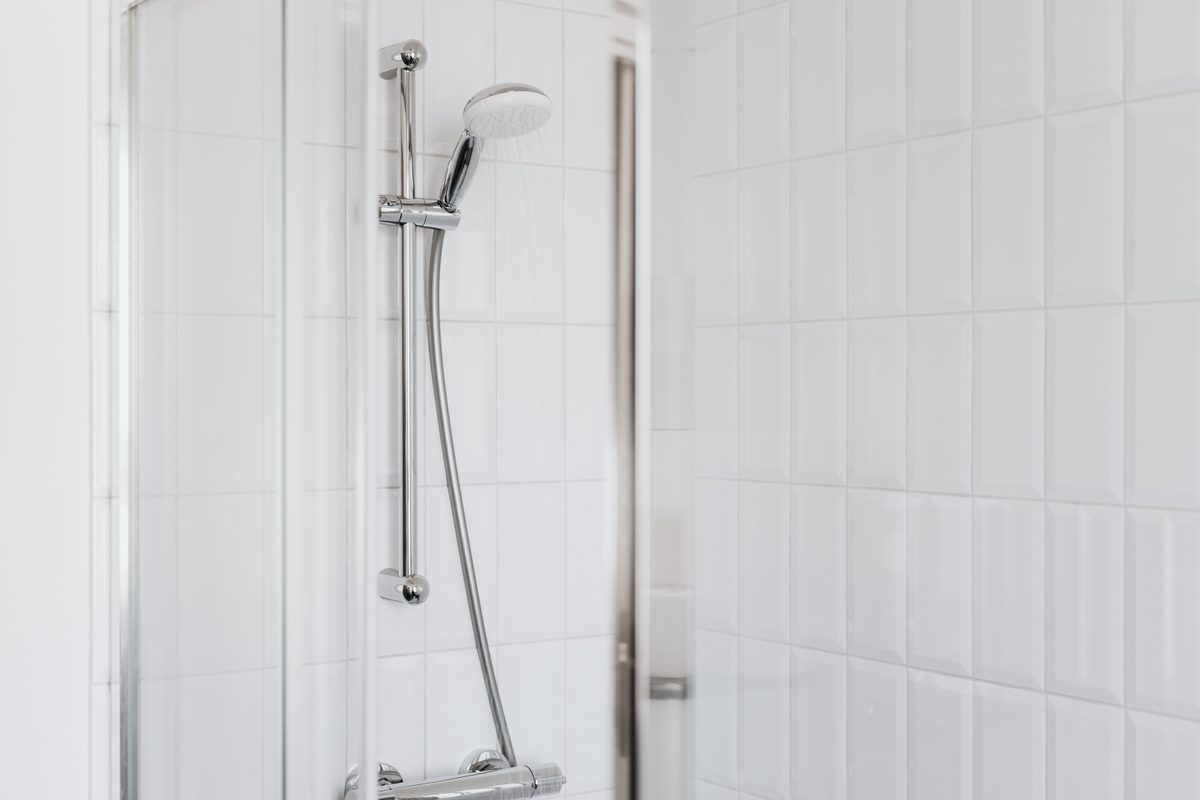
Over 60% of walk-in showers now include a handheld showerhead. The reason is simple: it lets users direct water exactly where they need it, including while seated. A fixed showerhead mounted at 48 inches maximum height meets ADA requirements, but a handheld unit on a slide bar offers far more flexibility. When installing a new shower surround, adding a handheld unit is one of the easiest and cheapest upgrades available.
Standard toilets are 15 inches high. Comfort-height models sit at 17 to 19 inches — closer to chair height. That extra 2 to 4 inches reduces knee and joint strain by approximately 30%, making it significantly easier to sit down and stand up. Prices are generally comparable to standard-height toilets, so there is no cost penalty for choosing the safer option.
Research shows that participants with grab bars were 75.8% more likely to recover their balance during transfer tasks compared to those without support. A bolt-on safety frame with padded armrests adds that support without any wall modification. It is one of the fastest upgrades for someone who has started struggling with the sit-to-stand transition.
A bidet or bidet seat attachment reduces the need for twisting and reaching during personal hygiene. For seniors with limited shoulder, arm, or hand mobility, this can be the difference between independence and needing daily assistance.
Lever-style handles require minimal grip strength and meet ADA standards across every price point. Touchless faucets eliminate the need for grip entirely, making them the best option for severe arthritis or hand weakness.
A wall-mounted sink with open knee clearance underneath lets a wheelchair user roll up to the basin without obstruction. The recommended vanity height is 30 to 34 inches. Cabinet vanities block that access unless specifically designed with an open front.
One overhead fixture is not enough. Layered lighting — combining ceiling lights with task lighting near the mirror and inside the shower — eliminates the shadows where edges and wet spots hide. Target 70 to 100 lumens per square foot across the entire bathroom.
Motion-activated lights turn on automatically when someone enters the room. No fumbling for a switch in the dark. Plug-in night lights along the path from bedroom to bathroom add a second layer of protection during the most common fall scenario — a half-awake trip at 2 a.m.
A white grab bar on a white wall is invisible to someone with declining eyesight. High-contrast colors between grab bars, edges, and surrounding surfaces make safety features visible. Bathroom wall panels in lighter tones paired with darker grab bars and trim create the separation aging eyes need to navigate safely.
Built-in shelving and shower niches keep soap, shampoo, and razors within easy reach. Niche installation runs $150 to $350 per niche. Items stored between hip and shoulder height eliminate the two most dangerous movements in a bathroom: bending low and reaching high. When selecting acrylic shower walls or a prefabricated shower surround, look for systems with integrated shelving already built into the panel design.
Round knobs require a full grip-and-twist motion that many seniors cannot perform. D-pull or loop handles let users hook their fingers and pull, requiring far less hand strength. Swapping cabinet hardware takes minutes and costs almost nothing.
Every senior deserves a bathroom that supports independence — not one that puts them at risk. Whether you need grab bars, a curbless shower, or a complete accessible remodel with modern acrylic shower walls and waterproof shower wall panels, we can help. At Patriot Bath Remodeling, we specialize in aging-in-place upgrades that are safe, stylish, and built to last. Our team handles everything from planning to installation, so you can focus on what matters — keeping your loved ones safe at home. Call us today at (508) 748-5468 to schedule a free bathroom safety consultation and find out which upgrades make the biggest difference for your family.