Monthly Payments as Low as $99! | 1/2 OFF Labor on second Project
Planning a bathroom remodel cost in Massachusetts starts with one unavoidable truth: prices here run higher than the national average. Labor is expensive, older homes add complications, and the demand for quality finishes drives up every cost estimate. Whether you’re eyeing a budget bathroom makeover or a full primary suite overhaul, knowing the numbers before you call a contractor is the difference between a project that stays on track and one that stalls halfway through. This guide breaks down Massachusetts bathroom remodeling costs by project scope so you can plan with confidence. Have specific questions? Browse our frequently asked questions for quick answers.
Key Takeaways
The average bathroom renovation price in Massachusetts ranges from $5,000 for basic cosmetic updates to over $150,000 for fully custom luxury builds. Most homeowners land somewhere in the middle. Projects fall into four tiers: budget, mid-range, upscale, and luxury. Each is defined by scope, material quality, and how much of the existing layout stays intact. Greater Boston pushes costs even higher due to strong labor demand and the complexity of working in older housing stock.
A small or half-bath remodel typically runs $5,000 to $15,000. This is the budget bathroom makeover tier: cosmetic changes only. Think fresh paint, a new toilet or sink, a stock vanity from a big-box store, and ceramic tile or a fiberglass shower insert. The layout stays exactly as-is; no plumbing moves, no structural work.
In suburban markets like Worcester and Springfield, even a mid-range full-bath remodel often lands between $9,000 and $20,000, staying closer to national averages than Boston-area projects.
Choose this tier if your bathroom is structurally sound and you need an affordable refresh, not a transformation.
What it is: Cosmetic-only updates to a structurally sound bathroom. Typical work includes fresh paint, a new toilet or sink, a stock vanity, and ceramic tile or a fiberglass shower insert. The layout stays unchanged.
Best for: Homeowners who need a visible refresh on a tight budget and whose bathroom has no structural or plumbing issues.
Typical investment: $5,000 to $15,000
Expected outcome: An updated, cleaner-looking bathroom with improved fixtures, completed without disturbing plumbing or framing.
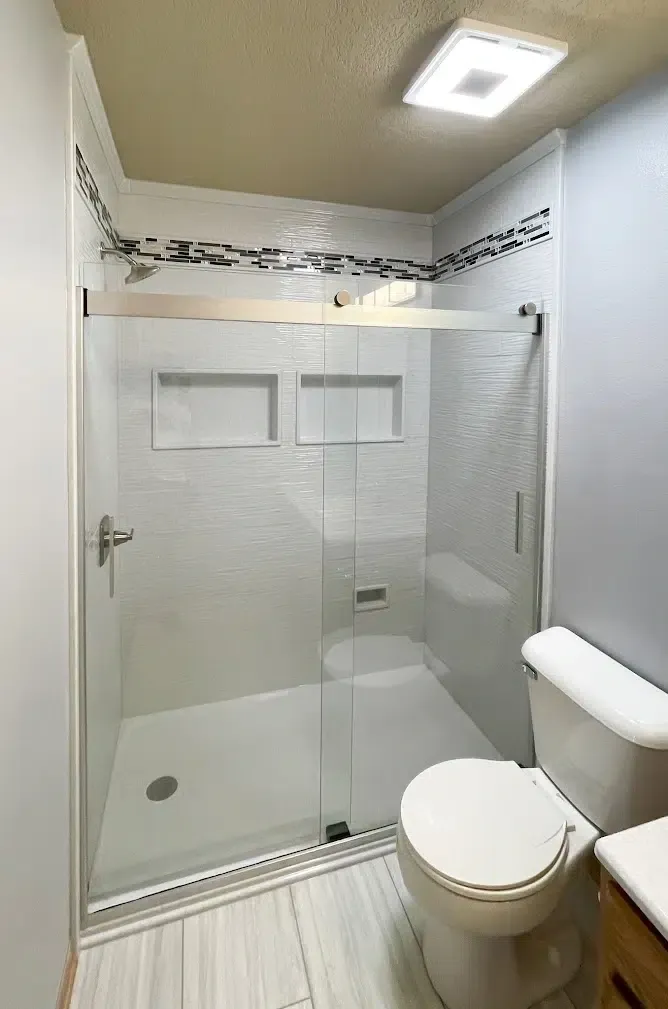
A full bathroom remodel in Massachusetts typically costs $15,000 to $35,000. This is the most common project scope in the state. The layout stays the same, but most fixtures and finishes get replaced. You can move up to porcelain tile, a semi-custom vanity, and upgraded fixtures from brands like Kohler or American Standard. A representative mid-range project in Massachusetts comes in around $34,250.
Choose this tier when your bathroom needs more than a cosmetic fix, but you’re not planning to move walls or relocate plumbing. It delivers a meaningful upgrade without triggering the cost spikes that come with structural changes.
What it is: A complete fixture and finish replacement with the existing layout preserved. Most surfaces and fixtures are replaced, but no walls are moved and no plumbing is relocated.
Best for: Homeowners who need more than a cosmetic fix but want to avoid the structural costs that push a project into upscale territory.
Typical investment: $15,000 to $35,000 (Massachusetts representative project: approximately $34,250)
Expected outcome: A fully refreshed bathroom with new porcelain tile, upgraded vanity, and improved fixtures from trusted brands, without triggering structural change costs.
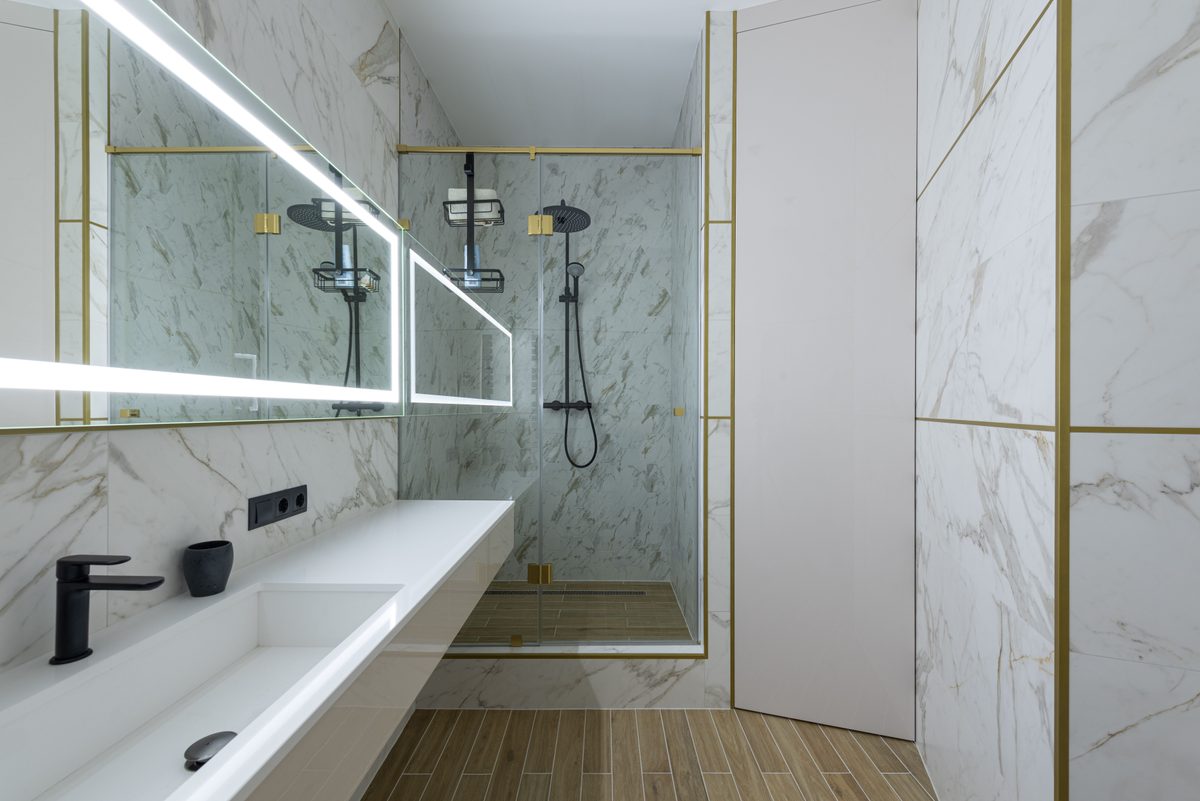
Upscale remodels run $35,000 to $75,000 and involve real structural work: walls moved, plumbing relocated, and frameless glass enclosures installed, designer fixtures from brands like Kallista or Brizo. Luxury projects push $75,000 to $150,000 or more, with steam showers, radiant floor heating, and custom vanities from premium brands like THG Paris or Lefroy Brooks.
Location adds another layer. Boston and Cambridge carry a 20–30% premium over the national average; even a basic bathroom renovation price in those markets starts at $17,500. Coastal areas like Cape Cod see an additional 15–20% seasonal markup during peak renovation season.
Choose the upscale or luxury tier when you’re building a long-term primary suite, recouping value on a high-end home sale, or creating a space that functions as a personal retreat.
What it is: A structural renovation involving walls moved, plumbing relocated, and premium finishes installed. Upscale projects ($35,000 to $75,000) include frameless glass and designer fixtures. Luxury projects ($75,000 to $150,000+) add steam showers, radiant floor heating, and custom cabinetry from premium brands like THG Paris or Lefroy Brooks.
Best for: Homeowners building a long-term primary suite, preparing a high-end home for sale, or creating a private retreat with no budget compromise.
Typical investment: $35,000 to $150,000+, depending on scope, structural changes, and material tier. Boston and Cambridge projects carry an additional 20 to 30% premium. Coastal areas like Cape Cod see a 15 to 20% seasonal markup during peak renovation season.
Expected outcome: A fully custom bathroom with designer fixtures, natural stone surfaces, and high-end features that serve as a private retreat and support strong resale value on premium properties.
Two projects with the same square footage can have very different price tags. What drives the gap isn’t the room. What drives the gap is what you do to it. Layout decisions, material selections, and Massachusetts-specific labor and code requirements each add or subtract thousands from the final number. Understanding these levers helps you build a realistic cost estimate before anyone picks up a tool.
The single biggest cost driver is whether the layout changes. Budget and mid-range remodels stay in the $5,000–$35,000 range precisely because the plumbing stays put. The moment you move a wall or relocate a drain line, the project crosses into upscale territory: $35,000 and up.
Fixture sizing matters too. A shower smaller than 36×36 inches is widely considered impractical. Discovering that mid-project means replanning tile, adjusting framing, and absorbing labor costs that weren’t in the original quote.
Choose to keep the existing layout if your goal is value and efficiency. Change it only when the current configuration genuinely doesn’t work.
Materials are where bathroom renovation prices spread apart across tiers. Budget projects use ceramic tile and fiberglass shower inserts, which are functional, affordable, and widely available. Mid-range projects step up to porcelain tile and trusted brands like Kohler or American Standard. Upscale builds use natural stone, custom cabinetry, and designer fixtures from brands like Kallista or Brizo. At the luxury tier, custom cabinetry, high-end natural stone, premium brands like THG Paris or Lefroy Brooks, and radiant floor heating become the standard.
Each tier jump is not just aesthetic. It reflects longer installation times, more skilled labor, and higher material lead times, all of which affect the final cost estimate.
Labor alone accounts for 40–65% of the total project cost on most Massachusetts bathroom remodeling jobs. That’s the single largest line item before a single tile is set. Permits for work involving plumbing, electrical, or structural changes add another $500 to $2,000, depending on scope and municipality.
Older homes, and Massachusetts has many of them, frequently require plumbing and electrical upgrades to meet current code. This isn’t optional, and it rarely shows up in an initial quote. Budget for it upfront. Discovering outdated knob-and-tube wiring or galvanized pipes during demolition can add thousands to a project that looked straightforward on paper.
A bathroom remodel cost is not one number. It is a stack of line items, each with its own range. Knowing what each trade and material category typically costs in Massachusetts bathroom remodeling lets you pressure-test any quote you receive and spot where a contractor may be padding or cutting corners. The figures below reflect a mid-range project scope.
These are the first costs incurred and often the least glamorous, but they set the foundation for everything that follows.
Demolition and debris removal runs $1,000–$3,000, roughly 5.8% of a mid-range budget. Plumbing is the heavier lift at $2,000–$8,000, accounting for about 14.6% of total spend. Electrical work typically adds $1,000–$4,000, or around 7.3%.
Together, these three categories represent more than a quarter of your budget before a single finish material is selected. In older Massachusetts homes, both plumbing and electrical lines often need code upgrades once walls are opened, and these costs do not always appear in the initial cost estimate.
Tile work and installation is the single largest material line item in a bathroom renovation, running $3,000–$12,000 and consuming roughly 22% of a mid-range budget. Flooring adds $1,000–$5,000 (8.8%). Fixtures and vanities range from $2,000–$10,000 (17.5%), cabinetry and storage run $1,000–$8,000 (13.1%), and countertops land between $500–$3,000 (5.1%).
These five categories alone can account for nearly two-thirds of your total project spend. Material tier is the primary dial. Switching from ceramic to natural stone or from a stock vanity to a semi-custom unit meaningfully shifts every one of these numbers.
Showers, tubs, and toilets are captured within the fixtures and vanity budget ($2,000–$10,000). Lighting falls under electrical ($1,000–$4,000). Neither category stands alone on a well-structured quote. They are line items within larger trade scopes.
What many homeowners underestimate is the finishing stage: paint, trim, and accessories typically add another $1,000–$3,000, or about 5.8% of a mid-range budget. It’s the last category purchased, and the first one squeezed when budgets run tight. Plan for it early, because skimping on finish work is one of the most visible places a remodel can look incomplete.
Massachusetts bathroom remodeling is expensive by default. But overspending is rarely inevitable. It’s usually the result of avoidable decisions made early. The homeowners who stay on budget aren’t the ones who spend the least; they’re the ones who plan the most. Three levers control the outcome: layout decisions, upgrade selection, and contractor vetting.
Keeping the existing plumbing and wall layout intact is the single most effective cost-containment strategy available. Relocating a drain line or supply pipe adds thousands before any finish material is touched. If the current layout is functional, preserving it is almost always the right call.
Hidden conditions amplify this further. Mold, water damage, or rot found after demolition can add $1,000–$10,000 to the total, and the more walls you open, the higher the exposure. A budget bathroom makeover that stays within its original footprint faces far fewer of these surprises.
Choose to change the layout only when the existing configuration creates a genuine functional problem that no finish-level solution can fix.
Not all improvements return equal value. A focused cosmetic refresh, including a new vanity, updated fixtures, and improved lighting, can yield an ROI of 70–80%. That’s a meaningful return on a relatively modest bathroom renovation price.
Accessibility upgrades (curbless showers, grab bars, wider doorways) deliver approximately 64% ROI while broadening buyer appeal, particularly for aging-in-place buyers. Neutral, timeless design choices such as white, gray, or beige palettes, subway tile, and clean lines protect long-term value better than trend-driven selections that date quickly.
Choose targeted upgrades over full replacements when the core structure is sound. The finish layer drives perception; it doesn’t need to cost like a structural overhaul.
Always require a written contract with a detailed scope of work before any money changes hands. An upfront payment request exceeding 30–40% of the total project cost is a red flag. Legitimate contractors do not require it. Verify licensing and insurance, and prioritize contractors with demonstrated experience in older New England homes, where code compliance issues are common.
Cutting corners on waterproofing or ventilation is where low bids become expensive mistakes. Improper installation in either area can lead to mold and water damage requiring $5,000–$20,000 in remediation, far more than the cost estimate difference that made the cheaper bid attractive in the first place.
Yes, when it’s planned well. A bathroom remodel is one of the few home improvements that delivers both immediate lifestyle value and a measurable financial return at resale. Massachusetts bathroom remodeling carries higher upfront costs than most states, but the market also rewards quality work, as our completed projects show. The question is not whether to remodel. It is how to scope the project so the investment makes sense for your specific situation.
According to the 2025 Remodeling Cost vs. Value Report, bathroom projects rank among the strongest-performing home improvements for resale return. The upgrades buyers respond to most are also the most functional: walk-in showers consistently outperform large soaking tubs in master bathrooms, and double vanities, ample storage, and quality lighting top buyer preference lists.
The pattern is consistent: practical, broadly appealing upgrades outperform luxury statement features when measured strictly by ROI. A bathroom renovation price that prioritizes function over spectacle tends to recover more at the closing table.
Scope your remodel to match your home’s value and your timeline to sell. A basic remodel is the right fit when the bathroom is functional but dated, and budget recovery is the primary goal. A mid-range remodel, the most common project scope in Massachusetts, makes financial sense for the widest range of homeowners: enough improvement to move the needle, without the structural costs that erode ROI.
Overly personal or trend-driven material choices consistently underperform at resale. Durability and broad appeal beat niche aesthetics every time. Choose finishes that a future buyer can live with, not just ones you love today.
Before signing anything, build a contingency fund of 10–20% of your total project budget. It’s the most commonly skipped financial safeguard in bathroom remodeling, and the most consequential when something unexpected surfaces behind the walls.
Get a minimum of three written estimates from licensed, insured Massachusetts contractors. Review each scope of work line by line, not just the bottom number. Credentials, insurance, and a detailed written contract aren’t bureaucratic formalities. They’re the difference between a smooth project and a costly dispute.
The groundwork you do before demolition starts determines how much the finished bathroom actually costs.
Patriot Bath Remodeling brings over 50 years of combined experience to every project in Massachusetts, Rhode Island, and southern New Hampshire. The team is fully licensed, bonded, and insured, with specific expertise in the code compliance challenges common to older New England housing stock. Every project is backed by transparent pricing, flexible financing options including monthly payments as low as $99, and a quality guarantee with comprehensive warranties.
When you should choose us: You are planning a full bathroom to luxury-tier remodel. You own an older Massachusetts home with potential code upgrade needs. You want a team that has completed hundreds of projects on budget and on time across the South Shore, Greater Boston, Rhode Island, and New Hampshire.
When we may not be the right fit: You are looking for a DIY-level cosmetic job where you supply your own materials and only need installation labor. Your project falls outside our service areas in Massachusetts, Rhode Island, or southern New Hampshire.
A well-planned bathroom remodel in Massachusetts pays back in comfort, function, and resale value. The numbers are clear: scope it right, choose durable finishes, protect your budget with a contingency fund, and hire licensed professionals who know the state’s codes and older housing stock.
At Patriot Bath Remodeling, we handle every phase, from your first cost estimate to the final walkthrough. We’ve helped homeowners across Massachusetts complete projects on budget and on time, at every tier from budget bathroom makeovers to full luxury builds.
Call us at (508) 748-5468 or reach out online to schedule your free consultation. Let’s build something worth it.