Monthly Payments as Low as $99! | 1/2 OFF Labor on second Project
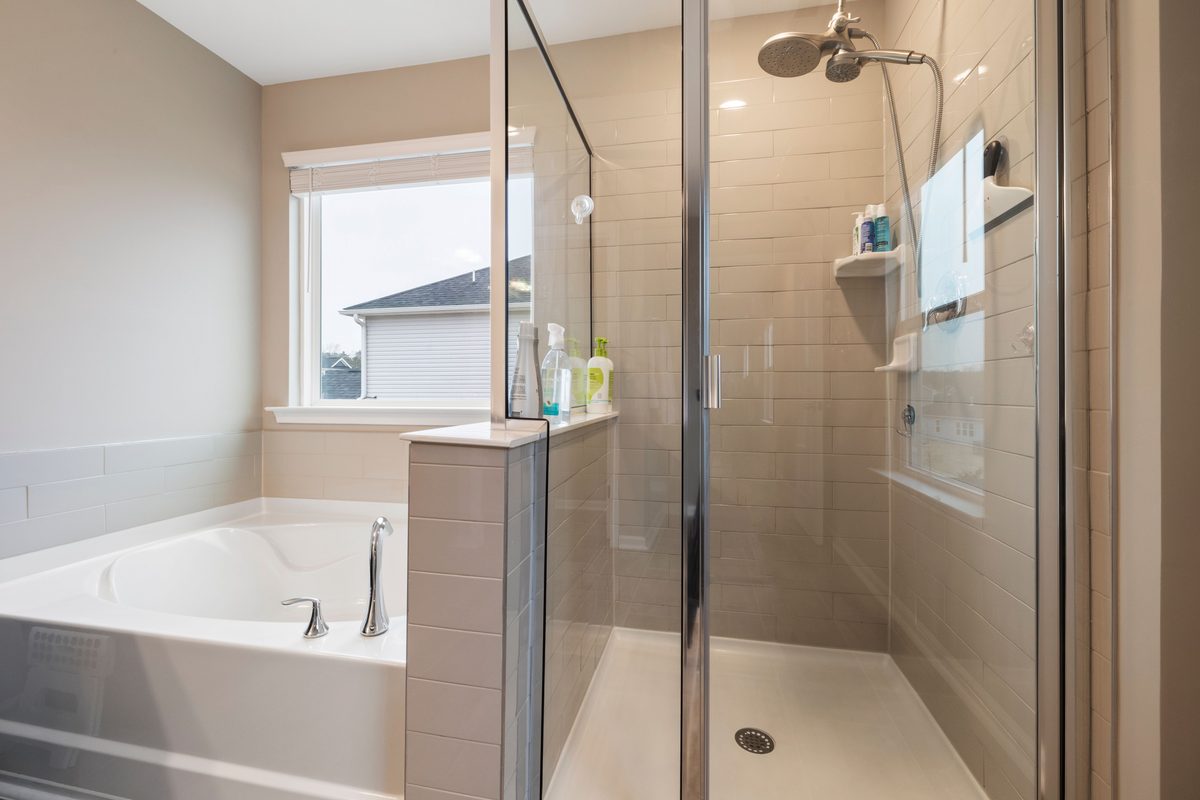
Shower surround cost varies significantly based on material type, installation complexity, and regional labor rates. Massachusetts homeowners typically spend between $770 for basic prefabricated units and $8,000 for custom stone installations.
Understanding shower surround pricing helps homeowners budget accurately and choose materials that balance upfront expense with long-term value. Material selection directly impacts both installation time and future maintenance requirements.
A shower surround is a waterproof wall system that encloses shower areas and protects structural elements. These panels or tile installations prevent water damage while providing finished aesthetic surfaces.
Panel systems deliver faster installation, fewer grout lines, and more predictable labor costs than traditional tile. Tile offers the broadest range of sizes, patterns, colors, and luxury finishes available.
Tile leads in consumer desire while surround systems win on speed, maintenance, and labor certainty. This trade-off makes material selection a practical decision between design freedom and lifecycle simplicity.
Fiberglass and FRP consist of thin molded or sheet-based reinforced plastic panels for budget installations. Acrylic uses molded or thermoformed polymer panels and modular kits in mid-range applications.
PVC and composite panels feature thick waterproof composite sheets or complete kits with integrated trim systems. Solid surface, cultured stone, and tile or natural stone represent premium categories with site-installed units.
Material choice is the primary driver of shower surround expense and determines both upfront costs and long-term durability. Entry-level fiberglass starts at $300 while premium natural stone reaches $8,000 for standard installations.
Quality differences within each material category create additional price variation from basic to upgraded versions. Higher-grade acrylic, thicker PVC panels, and designer tile patterns increase costs within their respective segments.
Labor accounts for a significant portion of total shower surround pricing, especially in Massachusetts markets. Professional installation for prefabricated surrounds starts at $770 to $960 for baseline systems.
Custom tile and natural stone installations require specialized skills and extended timelines that multiply labor expenses. Complex layouts, waterproofing requirements, and surface preparation all add to final installation costs.
Massachusetts homeowners face higher labor rates than most U.S. markets due to regional wage structures. Median household income of $103,960 and median home values of $562,100 support above-average remodeling budgets.
Urban Massachusetts bathrooms favor faster-installing panel systems due to space constraints and scheduling demands. Suburban locations with larger bathrooms accommodate more extensive tile and custom stone installations.
Fiberglass and FRP panels cost $300 to $450 for basic sheet systems and $300 to $1,200 for complete kits. These materials offer the lowest shower surround cost but provide limited durability and fewer finish options.
Lightweight construction simplifies installation and reduces labor time for quick bathroom updates or rental properties. Lower initial investment comes with trade-offs in scratch resistance, longevity, and premium appearance.
Standard acrylic shower kits range from $400 to $700, while premium high-gloss systems reach $3,000 to $3,600. PVC composite shower and tub kits typically cost $1,100 to $1,500, with 96-inch systems adding $300.
These materials balance affordability with improved durability, easier cleaning, and better visual appeal than fiberglass. PVC panels hold 47.3% of the global shower wall panel market in 2026.
Cultured marble kits cost $1,200 to $1,600, while real granite or marble shower walls range from $4,000 to $8,000. Seamless solid surface installations eliminate grout lines and provide integrated shelf and bench options.
Tile dominates premium shower walls with 83% of upgrading homeowners choosing ceramic, porcelain, or natural stone. Design flexibility and resale appeal justify higher installation costs and ongoing grout maintenance for many buyers.
Massachusetts median household income reaches $103,960, with median owner-occupied home values at $562,100. Renovating homeowners include 4% in the youngest cohort, 37% middle-age, and 59% age 59 and older.
Income distribution shows 28% of renovators below $100,000, 25% at $100,000 to $149,999, and 47% at $150,000 and above. Median primary-bath renovation spend is $7,500 for Millennials, $13,000 for Gen X, and $15,000 for Baby Boomers.
Long-term cost effectiveness matters to 69% of homeowners adopting sustainable bathroom features in recent surveys. Cleanliness ranks as the top bathroom priority for 65% of users, valuing relaxation spaces.
Functionality and livability drive 28% of remodeling decisions, while durability and beauty each influence 23% of choices. Low maintenance appeal grows stronger as homeowners consider lifetime ownership costs beyond initial installation.
Massachusetts homeowners hire professionals for 93% of primary bathroom renovations compared to 86% nationally. This elevated rate reflects both regional labor quality and homeowner preference for guaranteed workmanship.
Professional installation becomes particularly important for bathroom remodeling projects involving waterproofing and structural modifications. Contractor involvement ensures code compliance and reduces the risk of future water damage.
Elevated Massachusetts labor rates make fast-installing panel systems financially attractive compared to tile installations. Professional hourly rates influence total project costs more significantly than in lower-wage regions.
Material decisions increasingly factor in installation time differences when labor represents 40% to 60% of total expense. Homeowners often select premium panels over mid-grade tile to control labor hours and schedule disruptions.
Urban Massachusetts bathrooms feature smaller dimensions and tighter schedules that favor panel-based systems. Suburban locations provide more room for tile, solid surface, and custom stone-look installations.
Condominium restrictions and multi-unit building requirements further push urban renovations toward faster panel solutions. Single-family suburban homes accommodate extended tile installation timelines and more complex bathroom remodel process sequences.
The 93% professional hiring rate in Massachusetts primary bathroom renovations exceeds national averages significantly. This preference stems from both homeowner income levels and recognition of waterproofing complexity.
Licensed contractors provide warranty protection and expertise that justify higher upfront labor investment. Professional installation becomes essential when homeowners expand shower dimensions by more than 50%.
FRP panels start at $300 to $450 for basic sheet systems suitable for secondary bathrooms. Fiberglass shower kits range from $300 to $500 for standard sizes and extend to $1,200 for larger configurations.
Prefabricated surround baseline installation costs $770 to $960, including materials and basic labor. These options suit rental properties, basement bathrooms, and homeowners prioritizing minimal shower surround expense.
Standard acrylic shower kits cost $400 to $700 for typical residential applications with improved finishes. PVC composite shower and tub kits range from $1,100 to $1,500 for complete systems.
Systems measuring 96 inches add approximately $300 to standard pricing for taller shower enclosures. Mid-range materials represent the fastest-growing segment for bathroom remodeling services in Massachusetts.
High-gloss premium acrylic systems reach $3,000 to $3,600 for designer finishes and integrated features. Cultured marble kits cost $1,200 to $1,600, while cultured granite runs slightly higher.
Real granite or marble shower walls command $4,000 to $8,000 for standard shower installations. These premium materials appeal to design-focused buyers prioritizing luxury appearance and long-term home value.
The Massachusetts shower surround market reaches an estimated $18.6 million in 2026 based on housing stock analysis. The Northeast market totals approximately $140.8 million for the same period.
Massachusetts market projections range from $23.5 million to $25.0 million by 2031, depending on growth rates. Northeast market forecasts span $177.1 million to $188.9 million with growth rates between 4.7% and 6.06% CAGR.
Tile maintains dominance with 83% of homeowners upgrading shower walls, choosing ceramic or porcelain options. The PVC panel segment captures 47.3% of the global shower wall panel market in 2026.
Composite and engineered materials grow faster than traditional options due to maintenance and installation advantages. This shower surround price guide reflects increasing consumer acceptance of panel alternatives to traditional tile.
Baby Boomers represent 59% of renovating homeowners and spend a median of $15,000 on primary-bath upgrades. Aging-in-place priorities drive demand for seamless, low-maintenance surfaces with slip-resistant properties.
Safety features integrate more naturally with solid surface and composite panels than traditional tile installations. Accessibility modifications align well with the maintenance benefits inherent in modern surround systems.
Material selection requires balancing initial shower surround pricing against lifetime maintenance costs and installation timelines. Massachusetts-specific considerations include elevated labor rates, high professional hiring rates, and above-average household incomes.
Budget-conscious buyers find value in acrylic and PVC composite systems that reduce labor hours. Quality-focused homeowners often select solid surface or premium tile to maximize long-term durability.
Urban renovations benefit from faster panel installations while suburban projects accommodate custom tile work. This Massachusetts guide demonstrates how location influences practical material choices.
The decision between panel systems and tile parallels choices in tub to shower conversion cost analysis, where installation speed affects total expense. Both project types reward careful material comparison against household priorities.
Professional installation becomes increasingly important as material costs rise and waterproofing complexity increases. Massachusetts homeowners benefit from transparent pricing discussions that account for both material and labor components.
Understanding market trends helps homeowners anticipate material availability and pricing shifts over multi-year planning horizons. Current projections suggest steady growth in both traditional tile and engineered panel segments.
Shower surround investments represent significant home improvement expenditures that warrant thorough research and professional guidance. Patriot Bath Remodeling brings 50+ years of combined team experience to material selection and installation planning.
Pricing out a shower surround on paper is one thing. Knowing which option fits your bathroom, your budget, and your long-term plans is another, and that’s where we come in.
At Patriot Bath Remodeling, our team brings 50+ years of combined experience to homes across the South Shore, Greater Boston, Rhode Island, and Southern New Hampshire. We’ll walk you through every material side by side, from acrylic and PVC composite panels to tile and natural stone, then give you a clear, transparent quote built around your space.
You’ll also get the peace of mind that comes with financing as low as $99 per month, a price match guarantee, and lifetime warranties on our work. Schedule your free, no-obligation estimate with Patriot Bath Remodeling today, and let’s build the right shower for your home and budget.