Monthly Payments as Low as $99! | 1/2 OFF Labor on second Project
Master bathroom features make or break a remodel’s budget and daily comfort. A master bathroom remodel ranks among the biggest investments a homeowner can make, yet nearly half of all bathroom renovations run over budget. The difference usually comes down to which features get prioritized early and which ones get cut once costs climb.
Here’s what we break down: the features worth paying for, realistic costs by tier, how long the work takes, and the sequence that keeps a project on budget from planning to final inspection.
A master bathroom serves the primary bedroom. It’s built for daily use by the homeowners, not guests. Its job is comfort, privacy, and function for the people who use it most.
Master bathrooms cost more and do more. A mid-range master bath keeps the same fixture layout and upgrades finishes. An upscale or luxury master bath adds a walk-in shower, a soaking tub, custom cabinetry, and premium stone.
The spending gap backs this up. Median spend on primary bathrooms hit $13,000 in 2024, compared to $6,000 for guest bathrooms. Larger primary bathrooms run 3 to 4 times the cost of a typical guest bath.
The homeowners use it every day. It’s the bathroom tied to their morning and nightly routine, which is why comfort and durability matter more here than anywhere else in the house.
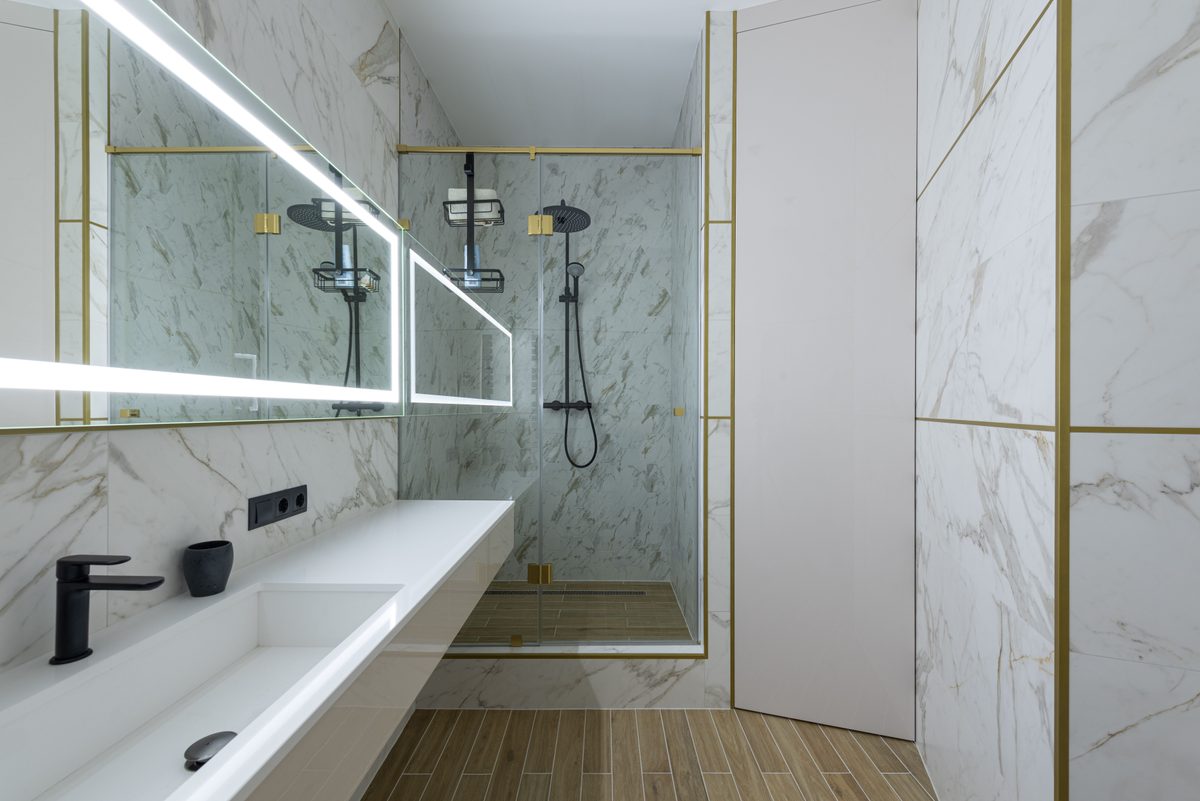
The shower is the centerpiece. A walk-in shower with frameless glass is the preferred style. A curbless design removes the entry threshold entirely for a cleaner, more open feel.
Budget follows a predictable pattern set by NKBA (National Kitchen and Bath Association) benchmarks:
| Budget Category | Share of Total Cost |
|---|---|
| Labor | 20% |
| Cabinetry and hardware | 16% |
| Fixtures | 15% |
| Faucets and plumbing | 14% |
| Flooring | 9% |
| Countertops | 7% |
| Walls and ceiling | 5% |
| Lighting and ventilation | 5% |
| Doors and windows | 4% |
| Design fees | 4% |
| Other | 1% |
Some upgrades pay off more than others. Showers, vanities, lighting, and ventilation deliver the strongest mix of daily use and resale value.
Walk-in showers lead every forecast. 78% of NKBA-surveyed professionals name walk-in as the preferred shower door style, and 74% expect frameless glass to lead future designs.
Cost tracks the demand. A professionally installed walk-in shower runs about $9,000 on average. Going curbless adds $2,000 to $5,000 beyond that. The payoff is real: walk-in and curbless showers rank as the highest ROI feature in a remodel, recovering about 55 to 60% of cost.
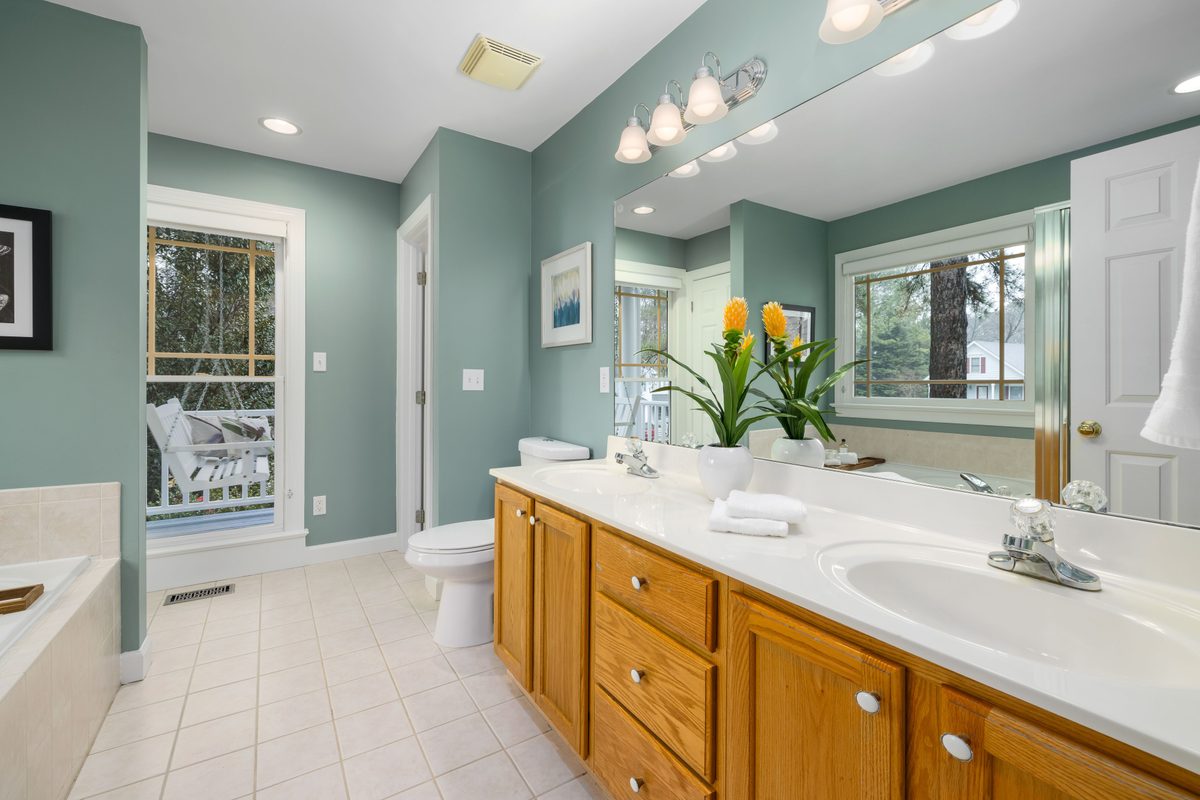
Double vanities solve the morning bottleneck. Two people, two sinks, no waiting. A quality double-sink vanity costs $700 to $1,800, while high-end setups run $3,500 to $4,500 installed. Even a standard vanity replacement lands around $1,500, ranging from $300 to $3,800.
Ventilation protects the investment. A basic exhaust fan installs for about $400, but skipping the right size matters: undersized fans contribute to mold in 40% of remodeled bathrooms within 3 years.
Heated floors add comfort at a cost. HomeAdvisor puts the national average at $4,128, while a 100-square-foot primary bathroom runs $800 to $1,700 installed for electric heated flooring.
Bathroom design is shifting toward tech, wellness, and shower-first layouts. These trends shape what’s worth building into a remodel today.
Smart fixtures are moving into the mainstream. Smart toilets run up to $2,000, and the global smart bathroom market is projected to exceed $11 billion in 2026.
Freestanding tubs are losing ground to showers. A basic soaking tub costs around $800, while whirlpool or walk-in tubs cost $7,000 to $9,000. Full installation with plumbing relocation can reach $3,656 to $10,000 when the floor needs reinforcement. Despite the range of options, shower enclosures now appear in more new primary bathrooms than freestanding tubs.
Showers are winning on wellness, too. 55% of NKBA respondents now prioritize expansive shower spaces with steam capability over a traditional bathtub.
Here’s how the main feature costs compare at a glance:
| Feature | Typical Installed Cost |
|---|---|
| Walk-in shower | About $9,000 |
| Curbless upgrade | +$2,000 to $5,000 |
| Double vanity (standard) | $700 to $1,800 |
| Double vanity (high-end) | $3,500 to $4,500 |
| Heated floors (100 sq ft) | $800 to $1,700 |
| Smart toilet | Up to $2,000 |
| Freestanding soaking tub | About $800 |
| Whirlpool or walk-in tub | $7,000 to $9,000 |
Good planning prevents delays and budget overruns. Timeline, material selection, and common mistakes all deserve attention before work starts.
Timeline depends on scope:
| Remodel Scope | Typical Timeline |
|---|---|
| Cosmetic refresh | 1 to 2 weeks |
| Actual work time (average project) | 3 to 8 weeks |
| Construction phase (master bathroom) | 4 to 6 weeks |
| Full gut remodel | 6 to 10 weeks |
| Luxury or custom primary bathroom | 8 to 12 weeks |
Early decisions keep the project on track. Material lead times run 4 to 12 weeks or more, so fixtures, tile, and cabinetry should arrive at least 2 weeks before the start date.
Rushed planning causes delays. Change orders made mid-project halt current work, require new materials, and can significantly extend the timeline.
Overruns are common, not rare. Budget overruns averaging 23 to 35%, including cases where homeowners skip a contingency fund, affect nearly half of all bathroom renovations. In 2025, 37% of homeowners exceeded their initial budget.
Two causes stand out. 35% blamed higher-end material choices, and 31% blamed mid-project scope expansion.
Cost depends on tier, region, labor, and the extras homeowners often forget. Here’s how the numbers break down.
Tier and region both move the price:
| Remodel Tier / Region | Typical Cost |
|---|---|
| Cosmetic refresh | $3,000 to $10,000 |
| Midrange remodel (national average, 2025) | $26,138 |
| Upscale remodel (national average) | $81,612 |
| Upscale or luxury master bath | $65,000 to $115,000 |
| Northeast metro premium vs. national average | 40% to 60% higher |
Labor takes the biggest cut. Current contractor data puts labor at 50% or more of total cost, though estimates elsewhere range from 40 to 65%.
Permits are a small but necessary line item. Plumbing permits cost $50 to $200 depending on the municipality.
Contingency funds protect the budget. Recommendations range from 10% to 30%, with 15 to 20% cited most often as the standard buffer.
Financing can help homeowners manage these upfront costs without draining savings, especially on upscale or luxury projects.
Spend and payback vary by bathroom type. Knowing the difference helps homeowners decide where to invest first.
Master bathrooms cost more, and spending keeps climbing. Median guest bathroom spend rose to $7,000 in 2025, while primary bathroom spend climbed to $15,000. Major primary remodels pushed even higher, to a median of $22,000.
Satisfaction backs the investment. NAR and NARI gave bathroom renovation a Joy Score of 9.8 out of 10, one of the highest-rated home projects.
Smaller bathrooms recover more of their cost at resale:
| Bathroom Type | Typical Resale ROI |
|---|---|
| Half bath / powder room | 75% to 85% |
| Guest bathroom | 70% to 80% |
| Full family bathroom | 65% to 75% |
| Primary or master bathroom | 55% to 65% |
| Luxury custom bathroom | 45% to 55% |
Priority often comes down to daily use and resale timing. Homeowners planning to age in place or stay long-term tend to invest in the master bath first, while those preparing to sell often focus on higher-ROI spaces like guest and family bathrooms.
The right order keeps a remodel on time and on budget. Planning comes first, construction follows, and each step depends on the one before it.
| Step | Task |
|---|---|
| 1 | Set budget, including contingency |
| 2 | Finalize design and full material and fixture selection |
| 3 | Secure permits |
| 4 | Demolition |
| 5 | Plumbing and electrical rough-in, with inspection |
| 6 | Waterproofing and tile |
| 7 | Cabinetry, countertop, and fixture installation |
| 8 | Finish work and final inspection |
Planning happens before anything is torn out. Step one is setting a budget, including contingency. Step two is finalizing design and full material and fixture selection before demolition starts. Step three is securing permits.
Construction follows a fixed sequence. Step four is demolition. Step five is plumbing and electrical rough-in, with inspection. Step six is waterproofing and tile. Step seven is cabinetry, countertop, and fixture installation. Step eight is finish work and final inspection.
Late changes cause the most damage. Late-stage changes are a primary driver of change-order delays and budget overruns. Ignoring material lead times has the same effect, stalling projects that were otherwise on schedule.
A master bathroom is one of the highest-value spaces in a home. Walk-in showers, double vanities, and smart ventilation deliver a strong mix of daily comfort and resale return, while freestanding tubs continue to lose ground to shower-first layouts.
Cost and timeline both scale with scope, from a $3,000 cosmetic refresh to a $115,000 luxury remodel spanning up to 12 weeks. The homeowners who avoid overruns are the ones who plan first: set a budget with contingency, finalize design and materials before demolition, and follow the construction sequence in order.
Done right, a master bathroom remodel pays back in daily use now and resale value later.
Patriot Bath Remodeling brings over 50 years of combined experience to homeowners across Massachusetts, Rhode Island, and Southern New Hampshire. From walk-in showers to full luxury remodels, our team handles design, materials, and installation with a lifetime warranty and a price match guarantee. Financing starts at just $99 a month, so you can get the bathroom you want without waiting. Call (508) 748-5468 Monday through Saturday, or get your free estimate today to start planning your master bathroom remodel.
Walk-in and curbless showers, double vanities, and adequate ventilation offer the strongest return for both daily use and resale value. A walk-in shower with frameless glass typically costs around $9,000 installed and recovers 55 to 60% of that cost at resale. Double vanities and heated floors add comfort at a lower cost, usually $700 to $4,500 depending on finish level. Homeowners on a tighter budget should prioritize the shower and ventilation first, then add vanities and heated floors as funds allow.
A midrange master bathroom remodel averages $26,138 nationally, while an upscale remodel runs $81,612. Northeast metro areas, including Massachusetts, Rhode Island, and Southern New Hampshire, typically run 40 to 60% higher than the national average. Upscale or luxury master bath remodels in this region often land between $65,000 and $115,000. A cosmetic refresh, without structural changes, usually costs $3,000 to $10,000.
Most master bathroom remodels take 3 to 8 weeks of actual work, though full gut remodels run 6 to 10 weeks and luxury projects with custom features can take 8 to 12 weeks. Material lead times of 4 to 12 weeks often extend the overall project timeline beyond the construction window itself. A cosmetic refresh, by contrast, wraps in as little as 1 to 2 weeks. Homeowners should finalize design and material selection before demolition starts to avoid mid-project delays.
A primary or master bathroom remodel recovers about 55 to 65% of its cost at resale, lower than smaller bathrooms like a half bath, which returns 75 to 85%. Despite the lower resale recovery rate, master bathroom remodels remain popular because they improve daily comfort for the homeowners who use the space most. NAR and NARI gave bathroom renovation an overall Joy Score of 9.8 out of 10, reflecting high homeowner satisfaction beyond resale numbers. Homeowners planning to stay long-term generally get more value from the investment than those remodeling right before a sale.
Budget overruns average 23 to 35% and affect nearly half of all bathroom renovations, most often caused by late-stage design changes and rushed material selection. Setting a contingency fund of 15 to 20% before work begins protects against these common overages. Finalizing design and purchasing all fixtures, tile, and cabinetry at least 2 weeks before the start date also reduces the risk of delays. Working with a contractor who provides transparent, itemized estimates helps homeowners spot potential cost creep before it happens.