Monthly Payments as Low as $99! | 1/2 OFF Labor on second Project
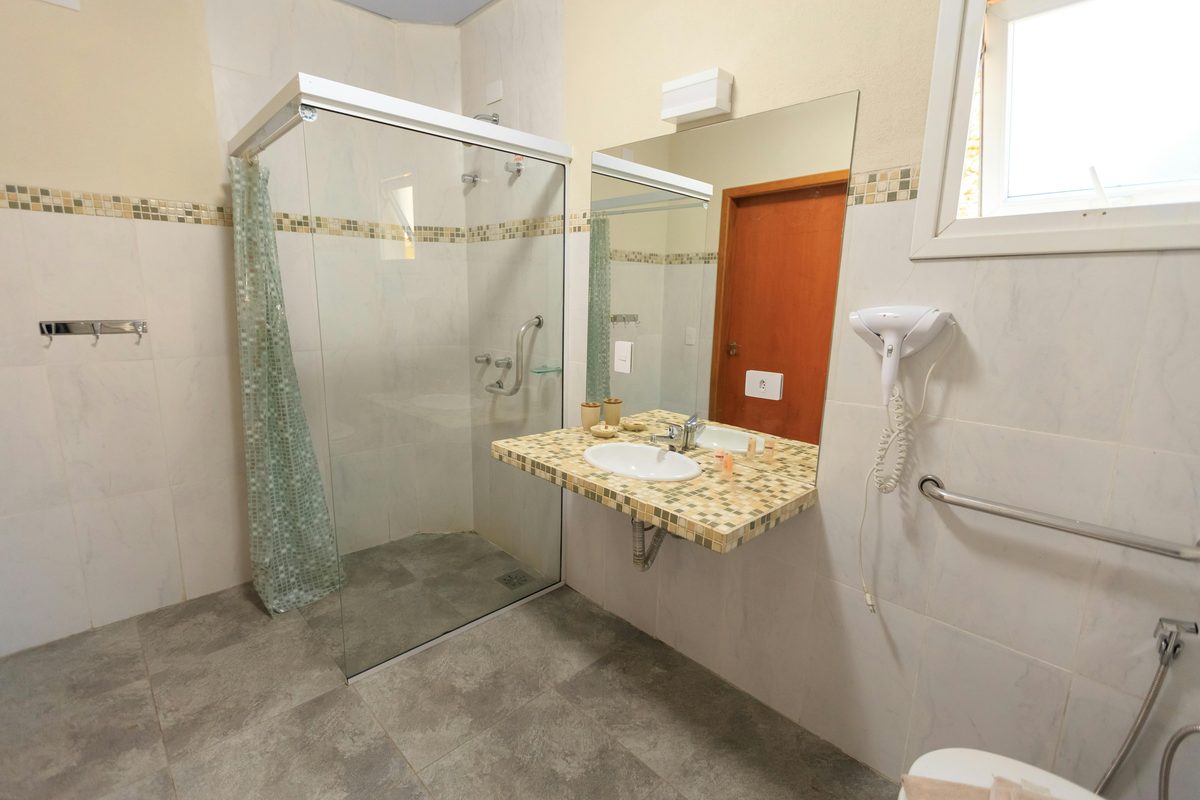
Selecting the right bathroom accessibility options requires balancing safety, budget, usability, and design preferences. Homeowners must evaluate grab bar placement, walk-in shower selection, fixture height, flooring materials, and installation complexity to create spaces that support independence and reduce fall risk.
Demand for accessible bathrooms grows as 75% of adults age 50 and older want to remain in their current homes. Among those expecting to make changes for physical limitations, 72% identify bathroom upgrades as a priority, with grab bars and non-slip surfaces leading planned improvements.
Accessible bathroom features are design elements and products that improve safety, support independent use, and reduce injury risk for people with mobility limitations or age-related physical changes. These include transfer showers with built-in seating, roll-in showers that accommodate wheelchairs, curbless showers without raised thresholds, chair-height toilets for easier sit-to-stand transfers, and support devices such as grab bars and shower seats.
The distinction between product categories matters when planning a renovation or evaluating the best accessible bathroom features for seniors. The global bathroom and toilet assist devices market focuses on products like grab bars, shower seats, commodes, and bath lifts, while the broader aging-in-bathroom products market includes fixtures, flooring, and complete bathing systems.
Transfer showers require a built-in or removable seat per ADA guidance and are designed for users who can move from a wheelchair or walker to a seated position. Roll-in showers eliminate barriers entirely, allowing users to remain in a mobility device or transfer to a shower chair without stepping over a threshold.
Curbless showers remove the raised entry found in traditional shower pans, creating a flush transition from the bathroom floor. Chair-height toilets elevate the bowl to 17–19 inches, matching wheelchair height and easing transfers for people with hip, knee, or lower-back limitations.
Disability prevalence increases sharply with age. Among U.S. adults ages 18–44, disability prevalence is 18.4%, rising to 26.7% for ages 45–64 and reaching 41.6% for adults 65 and older.
The intent to age in place is strongest among older adults and those in small towns or rural areas. Seventy-five percent of adults age 50 and older want to stay in their current home, and 43% expect to make changes to accommodate future physical limitations.
Safety and fall prevention are the primary reasons consumers choose accessibility modifications. Among homeowners with mobility issues, 65% selected features such as walk-in tubs specifically to increase safety and prevent falls.
Bathroom upgrades are the most common accessibility investment. In a study of Medicare beneficiaries age 65 and older who had experienced at least one fall, 55.5% had bathroom modifications, yet 40.2% of repeated fallers still lacked such features.
Consumer preference data from actual bathroom remodels provide the clearest picture of which features deliver the strongest combination of safety, usability, and value. Grab bars lead adoption rates, followed by non-slip flooring and low-curb or curbless shower designs.
Homeowners increasingly incorporate accessibility planning into standard bathroom projects. In 2025, 68% of homeowners considered special needs in their bathroom renovations, up four percentage points year over year.
Grab bars are installed in 61% of aging-in-place bathroom renovations, making them the single most common accessibility feature. Non-slip flooring appears in 55% of these projects, offering broad safety benefits that pair well with any bathroom layout.
Low-curb showers are selected by 52% of aging-in-place renovators, while curbless showers reach 28% adoption. Additional lighting is added in 31% of projects, and ADA-compliant toilets appear in 23% of accessibility-focused remodels.
Grab bars include straight bars, flip-up rails, integrated towel-bar designs, and toilet supports that provide stability during transfers and standing tasks. Shower seats come in wall-mounted folding styles, freestanding stools, and padded benches, supporting seated bathing and energy conservation for users with fatigue or limited balance.
Walk-in tubs feature a low-entry door, built-in seating, optional hydrotherapy jets, and quick-drain systems. Walk-in tubs require users to wait inside while the tub fills and drains, which can be a limitation for those who become cold easily or need faster bathing cycles.
Regional housing readiness varies significantly. About 62% of homes in the West South Central division are aging-ready, compared to only 20% in New England, where older housing stock increases retrofit intensity.
Wet rooms have grown to 16% of renovated bathrooms, up three percentage points year over year. Among wet-room adopters, 26% cite increased accessibility as a reason, reflecting growing awareness that barrier-free design supports long-term usability.
Cost is a major factor preventing the adoption of accessibility features, even among households with demonstrated need. If cost were not a constraint, 92% of consumers would remodel additional areas of their home, indicating that budget limitations suppress accessibility investment.
Installation complexity varies widely by feature type. Grab bars and non-slip flooring are relatively straightforward retrofits, while walk-in tubs and curbless showers often require structural changes, waterproofing upgrades, and plumbing modifications that increase both cost and disruption.
Safe Step walk-in tubs start at $3,000 for the tub only, not including installation or site preparation. Grab bars range from $31–$44 in the budget tier to $278–$379 and higher for premium integrated designs with towel bars or shelving.
Mid-range grab bars typically cost $59–$189, while non-slip flooring materials start around $1.59–$1.75 per square foot before labor. These costs exclude demolition, underlayment, waterproofing, and installation, which can add several thousand dollars to flooring projects.
Installation costs for walk-in tubs average about $5,000 according to the National Council on Aging. Adding a bathroom to an existing space can cost $6,000–$13,000, while building a new bathroom structure averages around $90,000.
Walk-in tub installation includes removal of the existing tub, potential plumbing and electrical upgrades, and careful sealing of the door mechanism. Installation disruption concerns many homeowners, particularly those who rely on a single bathroom or have limited mobility during renovation.
Cost barriers disproportionately affect older adults with lower incomes, particularly renters and cost-burdened households, who may delay or forgo accessibility investments. Fear that accessibility products will look institutional also influences purchasing decisions, driving demand for design-forward grab bars, teak shower seats, and fixtures that blend safety with aesthetics.
Affordability pressures are evident in the gap between intent and action. While 75% of adults age 50 and older want to stay in their current home, only about 6% of older households plan near-term accessibility renovations, and just 40% of homes currently meet aging-ready standards.
Construction quality directly affects safety, durability, and user confidence in accessibility products. ADA-compliant grab bars must sustain 250 pounds of force, requiring solid blocking or wall reinforcement during installation, and poor grab bar placement limits their benefit even when properly anchored.
Material choices influence warmth, maintenance, weight capacity, and perceived luxury. Shower seats made from phenolic plastic offer durability and water resistance at a moderate cost, while teak spa benches provide a warmer feel and a premium appearance but require more maintenance.
ADA grab bars must sustain 250 pounds of force, requiring proper wall reinforcement and correct fastener selection. Invisia and similar brands offer design-forward grab bars that integrate shelving or towel-bar functionality, reducing the clinical appearance of traditional safety hardware.
Poor grab bar placement limits safety benefits even when products meet load requirements. Bars should be positioned to support the user’s natural transfer path and grip height, which varies by individual mobility profile and bathroom layout.
ADA shower seats are generally specified at 17–19 inches high to match wheelchair height and support safe transfers. Shower seats must withstand 250 pounds and are commonly constructed from phenolic benches for durability or teak for spa-style aesthetics.
Teakworks4u and similar specialty brands offer wall-mounted teak seats that fold up when not in use. These seats provide a warmer, more residential feel than plastic or metal alternatives, though they require periodic oiling to maintain appearance and prevent water damage.
Non-slip flooring types include textured porcelain, matte ceramic, grip-enhanced tile, and low-slip mosaics, each offering different levels of slip resistance and design flexibility. Floor & Decor and other large retailers provide coefficient-of-friction ratings to help buyers choose accessibility features based on measured slip resistance rather than subjective material descriptions.
Walk-in tubs include acrylic tub shells, hydrotherapy jet systems, quick-drain pumps, and, in some cases, bariatric frames or wheelchair-accessible entry configurations. Maintenance complexity increases with more components, particularly for models with jets or electronic controls requiring periodic cleaning and mechanical upkeep.
Matching features to individual needs requires evaluating mobility profile, transfer ability, fall history, caregiver involvement, budget, and expected length of stay. A household with mild balance issues may achieve excellent results with grab bars, non-slip tile, and a chair-height toilet, while someone with lower-extremity weakness may benefit more from a low-curb shower with a folding seat.
Walk-in tubs are most compelling where the user values soaking comfort or hydrotherapy and can tolerate waiting inside during fill and drain cycles. For users who need faster bathing or prefer standing showers, a curbless or low-curb shower with a built-in seat often provides better daily usability.
Transfer ability determines whether a user can safely step over a shower curb, move from a wheelchair to a shower seat, or remain in a mobility device during bathing. Roll-in showers are optimized for users who remain in a wheelchair or transfer to a shower chair, while transfer showers require the user to move to a built-in seat.
Evaluating current and anticipated mobility changes helps prioritize features that will remain useful as physical abilities change. Homeowners planning to stay in their home for many years should consider features that accommodate future needs, even if those needs are not yet present.
Fall history is a strong predictor of future fall risk and should inform feature selection. Among Medicare beneficiaries age 65 and older who had experienced at least one fall, 55.5% had bathroom modifications, but 40.2% of repeated fallers still lacked such features.
Caregiver support needs also influence design choices. Bathrooms that accommodate a caregiver require wider doorways, sufficient maneuvering space, and grab bar placement that supports assisted transfers without forcing the caregiver into awkward positions.
Adults age 50 and older show strong intent to remain in their current community, with 73% wanting to stay. About 40% of homes are currently aging-ready, leaving a large retrofit opportunity for homeowners who plan to age in place.
Only about 6% of older households planned near-term accessibility renovations despite widespread intent to stay. Budget constraints and uncertainty about future needs contribute to this gap, underscoring the importance of phased upgrades that deliver immediate safety improvements while preserving options for future expansion.
Federal ADA guidance provides the most authoritative design benchmarks for accessible bathrooms, specifying dimensional requirements, load capacities, and clearances that support safe use by people with a wide range of disabilities. While ADA standards are legally binding in public and commercial spaces, they also serve as best-practice references for residential accessibility design.
Compliance with ADA guidance does not guarantee a bathroom will meet every individual’s needs, but it establishes a baseline for safety, usability, and transfer support. Homeowners should view ADA dimensions as a starting point and adjust based on specific mobility profiles and caregiver requirements.
ADA standards require grab bars to sustain 250 pounds of force, which necessitates solid blocking or wall reinforcement during installation. Grab bars must be mounted at specified heights and locations depending on fixture type, with different configurations required for toilets, showers, and bathtubs.
Shower seats must generally be 17–19 inches high and also withstand 250 pounds. ADA guidance requires seats in transfer showers and specifies that seats should extend the full depth of the shower to support safe positioning and weight distribution.
ADA shower thresholds are limited to a maximum of 0.5 inches if beveled, reducing trip hazards and supporting wheelchair access. Curbless showers eliminate the threshold entirely, creating a flush transition from the bathroom floor that accommodates walkers, wheelchairs, and users with limited step-over ability.
Grab bar diameter, projection from the wall, and spacing between the bar and wall are also specified in ADA guidance. These dimensions ensure users can achieve a secure grip without wrist strain or hand slippage during transfers.
Compliance and aesthetics are not mutually exclusive, though early-generation accessibility products reinforced institutional appearance. Modern grab bars, shower seats, and fixtures increasingly blend safety functionality with residential design, using finishes, materials, and integrated forms that align with contemporary bathroom styles.
Homeowners concerned about appearance should prioritize products that meet ADA load and dimension requirements while offering finish options and design integration. Premium brands such as Invisia offer grab bars that double as towel bars or shelving, reducing visual emphasis on the safety function.
The accessible bathroom market is moderately fragmented, with strong category-specific leadership rather than a single dominant enterprise. Walk-in tubs show relatively high consumer-facing brand recognition, while grab bars, shower seating, and fixtures are distributed across medical equipment brands, accessibility retailers, and premium bathroom manufacturers.
Brand differentiation centers on pricing strategy, product breadth, warranty coverage, and design integration. Some brands compete on entry-level affordability and functional simplicity, while others emphasize luxury finishes, hydrotherapy features, and comprehensive installation support.
Walk-in tub brands include Ella’s Bubbles, American Standard, Safe Step, and Kohler, each occupying distinct price and feature positions. Ella’s Bubbles starts around $3,870 for the tub only and is positioned as the best overall due to model variety and specialty configurations.
American Standard starts around $4,500 and competes on comfort and warranty. Safe Step begins at $3,000 for a basic tub-only configuration and includes a lifetime warranty on tub and installation, targeting budget-conscious buyers.
Global handgrips and grab bars revenue reached USD 735.0 million in 2024, representing about 14.4% of the implied bathroom and toilet assist devices market. Global shower chairs and stools revenue totaled USD 774.2 million in 2024, or approximately 15.2% of the same market.
Bath lifts are the fastest-growing segment at 8.2% CAGR, reflecting increasing demand for powered transfer solutions. Innovations in grab bars focus on aesthetic integration, multi-function designs, and finish options that align with high-end bathroom remodels.
Kohler offers a range of chair-height toilets that meet ADA height specifications while integrating contemporary design and finish options. ADA-compliant toilets in the mid-range typically cost $613–$879, while smart toilet premium tiers reach $2,500–$2,875.
Smart toilet features include automated cleaning technology, one-piece construction for easier maintenance, and integrated bidet functions. These features support hygiene and independence for users with limited reach or dexterity, though they add high cost compared to conventional chair-height models.
Selecting the right accessibility features for your bathroom remodeling project requires careful evaluation of safety priorities, budget constraints, and individual mobility needs. Grab bars, non-slip flooring, and low-curb showers deliver strong safety improvements at moderate cost, while walk-in tubs and smart toilets occupy premium price tiers but offer differentiated comfort and therapeutic benefits.
The gap between intent and adoption remains large, with only 40% of U.S. homes currently aging-ready despite 75% of adults age 50 and older wanting to remain in their current home. Cost, installation complexity, and uncertainty about future needs contribute to delayed investment, even among households with demonstrated fall history or mobility limitations.
Homeowners planning accessibility upgrades should prioritize features that address current safety risks while preserving flexibility for future modifications. Consulting how much does a bathroom remodel costs in Massachusetts and understanding the master bathroom remodel process helps set realistic budget expectations and project timelines.
Working with experienced contractors who understand senior bathroom design, walk-in shower selection, and grab bar placement ensures that products are installed correctly and positioned to support safe transfers. Reviewing the bathroom remodel process step-by-step guide helps homeowners prepare for installation disruption and plan phased upgrades that minimize inconvenience.
You deserve a bathroom that works for your life today and adapts as your needs change. At Patriot Bath Remodeling, our team brings over 50 years of combined experience to every project, from grab bar installation to full walk-in shower conversions designed for safe, comfortable aging in place.
We serve homeowners across Massachusetts, Rhode Island, and Southern New Hampshire. We are fully licensed, bonded, and insured, and we back every project with transparent pricing and flexible financing starting at $99 per month. No pressure, no guesswork, just a clear path to a bathroom that keeps you safe and independent. Contact Patriot Bath Remodeling today for your free, no-obligation estimate and take the first step toward a safer, more accessible bathroom.